Finding the best Custom DC Motor manufacturer in China takes more than comparing prices or browsing polished catalogs. The right partner should understand your application, explain design trade-offs, and provide evidence that its motors match your requirements. Michael Faraday, a pioneer in electromagnetism, wrote, “Nothing is too wonderful to be true, if it be consistent with the laws of nature.” That principle suits motor sourcing: ask for measurable proof, not impressive claims.
Start with the details that shape performance: voltage, torque, speed, duty cycle, mounting dimensions, noise limits, and operating conditions. Then assess each manufacturer’s engineering support, production capabilities, quality checks, and experience with similar projects. Request drawings, test reports, sample units, and clear answers about tolerances and lead times. A factory visit or independent audit can add useful context, but neither replaces testing a motor in your own application.
Be cautious when a quotation is unusually low or specifications remain vague. A sample may perform well while later batches vary; that possibility deserves attention. Compare suppliers using the same requirements, and document any agreed changes before production. This guide outlines practical ways to evaluate Chinese manufacturers, verify technical claims, and build a working relationship that can handle design revisions. There is no perfect checklist. Still, careful questions and real test data make the choice more dependable.
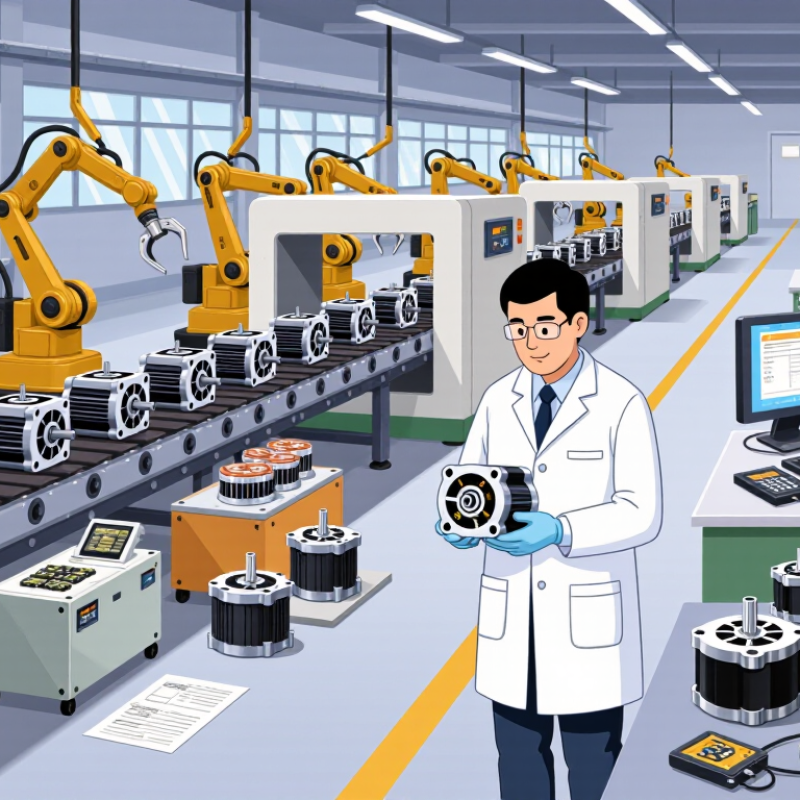
Define Your Custom DC Motor Requirements and Application Conditions
Before contacting a custom DC motor manufacturer in China, describe the machine the motor must move. A conveyor, valve, or compact mobile device creates different loads. Record supply voltage, continuous and peak torque, speed range, and rotation direction. Note acceleration time and how often the motor starts, stops, or reverses. Intermittent duty matters. A motor sized for average load alone may overheat during repeated starts. Include load inertia and any gearbox or belt losses when estimating torque.
Next, define physical and environmental limits. Provide shaft diameter and length, mounting-hole positions, overall envelope, and cable exit direction. Measure real clearances; drawings can hide cable bends and service access. State ambient temperature, dust or moisture exposure, vibration, and acceptable noise. If the motor sits inside a warm enclosure, say so. Ask the manufacturer which test conditions support its torque and temperature figures. A sample run helps. Verify performance with your actual load and power supply, since bench results can mislead. One mounting detail may still change after the first prototype. That is useful information to capture early.
Assess Manufacturers’ Engineering and Production Capabilities
A capable custom DC motor manufacturer should explain how it translates your operating conditions into a workable design. Share the required voltage, speed, torque, duty cycle, and available space. Then ask how these inputs affect winding choices, magnet selection, heat management, and expected service life. Clear answers matter. Ask for evidence.
Request test data for torque-speed performance, current draw, temperature rise, and noise under stated conditions. Check whether the sample was tested with the same load and voltage your application requires. A curve without test conditions is hard to compare. If requirements change, ask what must be redesigned and what can remain unchanged.
Production capability deserves the same scrutiny. Ask how the factory controls winding turns, air gaps, shaft dimensions, and assembly tolerances. These details can affect vibration and consistency between batches. Find out how incoming materials are checked, how production samples are tested, and how defects are recorded. A tidy line helps, but appearance alone proves little. Request sample inspection reports and ask to review the process for handling failed tests. Be specific about production volume and delivery expectations; a successful prototype does not guarantee stable mass production. I would also ask where the process still relies on manual checks. That answer may be imperfect, but it can reveal risks worth discussing.
Verify Quality Systems, Testing Methods, and Compliance
When evaluating a custom DC motor manufacturer in China, ask how its quality system controls each production stage. Request written inspection procedures, calibration records, and examples of corrective actions. Ask to see records. Check whether incoming magnets, shafts, and bearings are traceable to suppliers and batches. A reliable team should explain what happens when a part fails inspection, not just show a polished certificate. Certificates matter, but they do not replace consistent shop-floor practice.
Testing should match the motor’s real working conditions. For a compact DC motor, request data on speed, torque, current draw, temperature rise, and noise under specified loads. Ask for sample test reports and confirm that the instruments were calibrated recently. Watch a test run if possible; vibration or a sharp change in sound can reveal issues that a spreadsheet misses. Compliance also needs careful checking. Confirm which safety and environmental requirements apply to your product and destination market, then ask for relevant documentation. Keep the questions specific. A thorough audit still has limits, and one visit may not reveal how every shift works. Consider reviewing a pilot batch before approving larger production, even when the paperwork looks complete.
Compare Customization Options, Communication, and Lead Times
Choosing a custom DC motor manufacturer in China means comparing engineering flexibility, not just catalog size. Ask whether the team can tune voltage, speed, torque, winding, shaft dimensions, and mounting holes for your actual load. A useful supplier should explain trade-offs, such as higher torque increasing motor size or heat. Request a drawing and sample test results before approving tooling. Details matter.
Communication is part of the engineering process. Send a clear specification, then check whether the supplier flags missing items, such as duty cycle or ambient temperature. A polished quotation can still hide gaps; I would verify each assumption rather than trust a low price. Ask for separate dates for design approval, samples, tooling, and mass production. Also ask which components could delay delivery and how changes affect the schedule. The International Energy Agency’s 2011 report, Energy-Efficiency Policy Opportunities for Electric Motor-Driven Systems, estimated that motor-driven systems use about 45% of global electricity. That makes efficiency and thermal testing worth discussing, even for a small motor. Keep written records of revisions. Small errors linger.
Evaluate Total Costs and Choose a Suitable Manufacturer
A low quotation rarely tells the whole cost story. Compare tooling, samples, freight, inspection, maintenance, and likely replacement costs. The International Energy Agency’s 2011 report, Energy-Efficiency Policy Opportunities for Electric Motor-Driven Systems, estimated that motor-driven systems use about 45% of global electricity. That figure covers many motor types, not every DC motor. Still, it shows why efficiency deserves a place in cost comparisons. Estimate energy use from the motor’s actual load, operating hours, and controller—not its headline rating alone. Small details matter.
Ask each manufacturer for itemized pricing, torque-speed curves, temperature-rise results, and endurance-test conditions. Check that test conditions resemble your application. A polished PDF is not proof. Request samples and verify performance under realistic loads; record noise, current, temperature, and speed stability. Then assess production controls: winding inspection, commutator checks, calibration records, and batch traceability. Compare lead times and warranty terms, too. A cost sheet can still miss a failure mode. That is an uncomfortable gap. A factory visit or independent inspection may expose it. Choose the supplier whose documented process and technical support fit your motor’s duty cycle, not simply the lowest unit price.
How to Find the Best Custom DC Motor Manufacturer in China?
Evaluate total costs—not just the quoted unit price.
The chart shows cost categories to include in a supplier comparison. The percentages are an illustrative planning model, not verified industry averages or a supplier quotation. Request itemized quotes and compare tooling, unit pricing, shipping, quality inspection, duties, and after-sales costs using the same order quantity and delivery terms.
FAQS
Describe the machine the motor will move, such as a conveyor or compact device. Include supply voltage, torque, speed range, and rotation direction. Note acceleration time and how often the motor starts, stops, or reverses. Repeated starts can create heat. Include load inertia and gearbox or belt losses.
Provide shaft dimensions, mounting-hole positions, overall size, and cable exit direction. Measure actual clearances, including space for cable bends and service access. Share temperature, dust, moisture, vibration, and noise limits. A warm enclosure matters.
Ask how torque and temperature were tested. Confirm the test used your required voltage and load. Request a sample run with your actual power supply. Bench results can mislead.
Ask how voltage, speed, torque, duty cycle, and available space affect winding, magnet selection, and heat management. Ask about expected service life, too. Clear answers matter.
Request torque-speed results, current draw, temperature rise, and noise measurements. Each result should include its test conditions. A curve without those details is hard to compare.
Ask how winding turns, air gaps, shaft dimensions, and assembly tolerances are controlled. Find out how incoming materials are checked and production samples are tested. Request inspection reports and defect records.
No. A prototype may not reveal batch-to-batch variation. Share expected volume and delivery needs, then ask how production performance is monitored. Some uncertainty may remain.
Ask how failed tests are handled and where workers rely on manual checks. A tidy production line proves little by itself. I would treat an incomplete answer as a reason to ask more questions.
Conclusion
Finding the best Custom DC Motor manufacturer in China starts with a clear understanding of your application. Define the required speed, torque, voltage, operating environment, duty cycle, and installation limits before requesting a proposal. Then assess each manufacturer’s engineering expertise, production capacity, and ability to adapt designs, materials, and components to your needs. A capable supplier should be able to explain how its team will turn your specifications into a practical motor design.
Before making a decision, review quality-control procedures, testing methods, and relevant compliance documentation. Compare customization options, communication practices, sample and production lead times, and the support available throughout the project. Finally, evaluate the total cost rather than focusing only on the unit price; tooling, testing, delivery, and future production requirements can all affect value. Choose a manufacturer that demonstrates reliable capabilities, clear communication, and a strong fit for your application and budget.

 TorqFlex Motor