What Is the Best High Efficiency DC Motor for 2026?

Time:2026-11-18 Author:Madeline
0%

Choosing the best High Efficiency DC Motor for 2026 is not about chasing one impressive efficiency number. It means matching a motor to its real load, speed range, operating hours, and control system. A compact BLDC motor may suit a quiet pump or fan, while a brushed DC motor can still make sense in a simpler, cost-sensitive design. The right answer depends on the job.

The International Energy Agency’s Energy Efficiency 2023 report highlights the large electricity demand associated with motor-driven systems. In the United States, the Department of Energy reports that electric motor systems use about 70% of industrial electricity. Those figures explain why small efficiency gains matter at scale. They do not, however, tell buyers which motor will perform best in a particular machine. Efficiency claims need context: test conditions, controller losses, temperature, and the actual duty cycle all matter. A motor that looks excellent on a datasheet may run hot or waste energy when paired with the wrong drive.

IEA energy-efficiency expert Brian Motherway has used the concise phrase, “Energy efficiency is the first fuel.” For motor selection, that idea is practical, not abstract. Check measured performance, expected maintenance, noise, and total operating cost—not just purchase price. There is no universal winner. That is worth remembering. This guide compares the main DC motor options for 2026 and explains what to verify before choosing one. A remaining blind spot is unavoidable: published figures cannot fully predict performance in every installation.
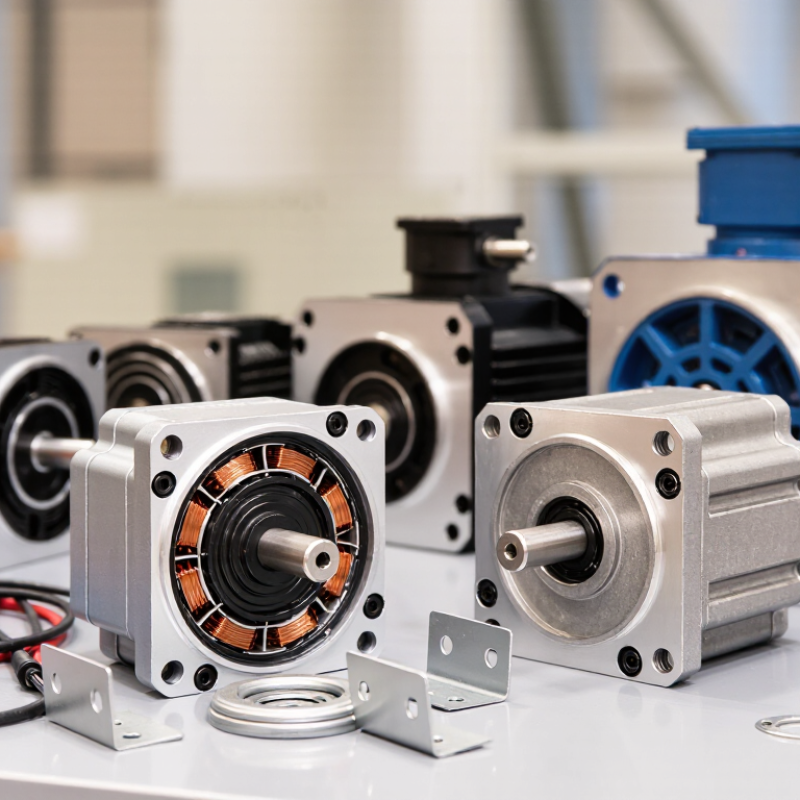
What Is the Best High Efficiency DC Motor for 2026?

What High-Efficiency DC Motors Are and How They Work

What Is the Best High Efficiency DC Motor for 2026?

A high-efficiency DC motor turns direct-current electricity into rotation while reducing losses as heat, friction, and electrical resistance. In brushed designs, a commutator and carbon brushes switch current as the rotor turns. Brushless DC motors use electronic switching instead. That changes maintenance. Brushless motors avoid brush wear, but require a compatible controller and correct setup. Neither design is automatically efficient in every application.

Efficiency is the mechanical power delivered divided by the electrical power supplied. Real performance depends on the operating point: a motor may run efficiently near its rated load but waste energy when oversized or lightly loaded.

Speed control matters, too. Pulse-width modulation can adjust motor speed without simply burning excess power in a resistor, though the controller itself has losses. Small details count, such as bearing drag, wiring resistance, and whether the motor can handle a machine’s startup load.

The U.S. Department of Energy’s 2023 U.S. Industrial and Commercial Motor System Market Assessment Report estimates that motor-driven systems use about 69% of U.S. industrial electricity. The International Energy Agency’s 2011 analysis puts motor systems at roughly 45% of global electricity use.

These figures cover motor systems broadly, not DC motors alone. That distinction is easy to miss. For a sound comparison, check efficiency across the expected speed-and-load range, not just one peak figure; real installations rarely behave like a tidy test bench.

Which DC Motor Technologies Offer the Highest Efficiency

For high efficiency in 2026, permanent-magnet brushless DC motors and electronically commutated motors are strong candidates. Their rotor magnets avoid the electrical losses found in a wound rotor, while electronic commutation removes brush friction and wear. The International Energy Agency estimates that electric motor systems use about 45% of global electricity. Even small efficiency gains can matter at scale.

That matters. In practice, efficiency depends on the full operating point, not a label alone. A well-designed motor can lose its advantage if it runs far below its rated load or uses poorly matched controls. The U.S. Department of Energy’s Improving Motor and Drive System Performance sourcebook reports that motor-driven systems account for about 68% of U.S. manufacturing electricity use. It supports evaluating the motor and drive together.

Brushed DC motors remain useful where simple speed control and low initial cost matter, but brush contact adds friction and maintenance. For compact equipment, compare measured efficiency across the expected speed and torque range, including controller losses. Check thermal performance too: a hot housing can signal wasted energy. No motor wins every duty cycle. Selection data can be incomplete, so test the actual load before treating catalogue figures as field results.

How to Compare Motor Efficiency, Power, and Operating Costs

Choosing a high-efficiency DC motor in 2026 starts with its actual job, not a headline efficiency figure. Compare motors at the same voltage, speed, torque, and temperature; otherwise, the numbers can mislead. Check efficiency at your normal operating point, since performance can change with load. A motor rated at 500 watts may not deliver that power continuously without adequate cooling. Small details matter. A high-efficiency label alone cannot predict your savings.

Estimate energy use from real duty cycles: hours per day, starts, stops, and time under heavy load. Include controller losses, cooling, maintenance, and replacement costs. A fan running eight hours daily has a different cost profile from a short-duty actuator, even at similar rated power. Use local electricity rates and measured input power where possible. I would treat a tidy spreadsheet as a starting point, not proof; actual operating conditions are rarely so tidy.

Tips: Record voltage, current, shaft speed, and load during a typical shift. Compare results under matching conditions, and allow for measurement error. If the motor runs hot or noisy, check alignment and ventilation before relying on its efficiency rating.

How Application Needs Shape the Best Motor Choice

What Is the Best High Efficiency DC Motor for 2026?
How Application Needs Shape the Best Motor Choice

The best high-efficiency DC motor is the one that suits its real workload, not just its catalogue rating. The International Energy Agency’s 2011 report on electric motors estimates that motor-driven systems use about 45% of global electricity. A U.S. Department of Energy motor-systems sourcebook reports that they account for roughly 68% of U.S. manufacturing electricity use. These are system-level figures, not proof that one motor type fits every machine. Fit matters.

For a ventilation fan running all day, a brushless DC motor may offer useful efficiency and reduced brush maintenance. A small actuator that starts, stops, and reverses often needs strong low-speed torque and reliable thermal performance. Check the duty cycle, load curve, supply voltage, control method, and available cooling before comparing peak-efficiency figures. Measure first. A motor that performs well on a test bench may run hot inside a cramped enclosure. I would also question savings estimates based only on rated efficiency; actual load and operating hours can change the result considerably.

What Is the Best High Efficiency DC Motor for 2026? - How Application Needs Shape the Best Motor Choice

There is no single best DC motor for every application. Efficiency depends on the motor, controller, operating speed and load, and the performance figures below are comparative guidance rather than guaranteed specifications.

Motor type Commutation Efficiency potential Maintenance and control Applications that may suit it Main trade-off
Brushless DC (BLDC) Electronic switching using a controller; commonly uses permanent magnets. Often high when correctly matched to the load and operated near its efficient speed range. No brushes to replace; requires a compatible electronic controller and suitable commutation or position-sensing strategy. Fans, pumps, appliances, electric mobility, and automation requiring efficient continuous operation. Higher system complexity and controller cost than a basic brushed motor.
Permanent-magnet brushed DC (PMDC) Mechanical brushes and a commutator. Can be effective in appropriately sized, intermittent-duty applications; losses rise when poorly matched or heavily loaded. Simple voltage-based speed control; brushes and commutator wear and may need inspection or replacement. Small actuators, toys, portable mechanisms, and cost-sensitive equipment with straightforward controls. Brush wear, electrical noise, and a finite service life that depends on duty and operating conditions.
Coreless brushed DC Mechanical brushes and a commutator; the rotor winding has no iron core. Low rotor inertia can support responsive operation; actual efficiency depends on winding, load, and operating point. Fast response and simple drive electronics; brushes still wear, and thermal limits need attention. Precision instruments, compact medical devices, and lightweight mechanisms needing quick acceleration. Often less suitable for sustained high loads or poor heat-dissipation conditions.
Brushed DC with field winding Mechanical brushes and a commutator; magnetic field is produced by a winding. Can be suited to particular high-power or variable-speed duties; field-winding losses must be included in system efficiency. Speed and torque characteristics can be adjusted through field and armature control; requires brush maintenance and more involved control. Some industrial drives and applications where controllable torque-speed behavior is important. More components and maintenance than many modern electronically commutated options.
Integrated BLDC motor and drive Electronic commutation with the drive electronics packaged with or attached to the motor. Can improve system-level matching when configured for the actual load; packaging alone does not guarantee higher efficiency. Simplifies wiring and setup; configuration, cooling, and access to the integrated electronics should be considered. Compact machinery, automated equipment, and designs where a ready-to-integrate motor-drive package is useful. Less flexibility to replace or customize the motor and drive independently.

Selection tip: Compare efficiency at the intended voltage, speed, torque, and duty cycle—not just at a motor’s peak rating. Include controller losses, cooling needs, maintenance, and the load’s full operating profile.

How to Select a High-Efficiency DC Motor for 2026

What Is the Best High Efficiency DC Motor for 2026?

How to Select a High-Efficiency DC Motor for 2026

Choosing a high-efficiency DC motor starts with the real job, not the largest efficiency figure on a product sheet. Write down the required speed, torque, supply voltage, and daily operating hours. A motor can look efficient at one speed but perform poorly under your actual load. Check its efficiency curve near the operating point you expect, and confirm that the controller supports the motor’s voltage and current. Efficiency is only one part of the decision. Shaft dimensions, noise, starting torque, and available cooling can matter just as much. Heat tells the truth. During a trial, measure the motor housing temperature after it runs under a representative load, rather than judging it by a brief unloaded test.

Compare options under the same conditions, using measured input power and useful mechanical output where possible. Ask for test conditions behind published figures; different loads and temperatures can make comparisons misleading. For frequent starts or changing loads, consider how the motor and controller behave across the full duty cycle, not only at steady speed. Also check bearing life, maintenance needs, and whether replacement parts will be available. A brushless design may reduce routine brush maintenance, but it is not automatically the best fit for every system. I would leave room for a practical compromise: a slightly less efficient motor may run cooler, cost less to integrate, or fit an existing assembly better. Before committing, test the shortlisted motor with the actual controller, load, and mounting arrangement. Even a small alignment error can raise vibration and waste power.

FAQS

How should I compare the efficiency of two DC motors?

Compare them at the same voltage, speed, torque, and temperature. Check efficiency at your usual operating point, not only peak efficiency.

Does a 500-watt rating mean a motor can deliver 500 watts continuously?

Not necessarily. Continuous output depends on cooling and operating conditions. A motor inside a cramped enclosure may run hot.

What details should I record during a typical work shift?

Record voltage, current, shaft speed, and load. Note operating hours, starts, stops, and time under heavy load.

How can I estimate a motor’s operating cost?

Use measured input power, local electricity rates, and actual daily hours. Include controller losses, cooling, maintenance, and replacement costs.

Why can a fan and an actuator have different cost profiles?

A fan running eight hours daily has a different duty cycle from an actuator that starts, stops, and reverses often. Fit matters.

What motor features may suit a ventilation fan?

A brushless DC motor may reduce brush maintenance and offer useful efficiency for a fan running for long periods. Check its real operating load.

What should I check for a frequently reversing actuator?

Look for strong low-speed torque, reliable thermal performance, and a control method suited to frequent reversals. Measure under its actual load.

Can catalogue ratings reliably predict energy savings?

They are a starting point, not proof. Load, operating hours, cooling, and measurement error can change the result. My spreadsheet may still be wrong.

Conclusion

Choosing the best High Efficiency DC Motor for 2026 starts with understanding how it converts electrical energy into motion and where energy losses occur. Motor technologies vary in efficiency, speed control, torque delivery, maintenance needs, and performance across different operating conditions. Comparing these factors alongside rated power, expected duty cycle, and total operating costs offers a clearer picture than relying on efficiency figures alone.

The right choice depends on the application. Consider the required torque and speed, available power supply, operating environment, control system, and maintenance expectations. For frequent starts, variable loads, or continuous operation, these details can significantly affect long-term performance and energy use. By matching motor technology and specifications to real operating needs, buyers can select a reliable, cost-effective DC motor that supports efficient operation in 2026 and beyond.

Madeline

Madeline

Madeline is a dedicated marketing professional with a wealth of expertise in our company's core offerings. With a keen understanding of the industry, she brings a unique perspective to her role, consistently delivering high-quality content that highlights the superior aspects of our products. As......