Choosing the right Small DC Motor can feel simple until a prototype stalls under load. A motor may spin smoothly on a workbench, yet overheat inside a compact enclosure. Global buyers must compare torque, voltage, speed, noise, service life, mounting size, and supply stability.
Dr. Takashi Kenjo, a respected motor-control researcher and author, said, “A motor must be judged by the motion it produces, not by its label.” That principle matters when comparing seven practical options for international sourcing. A 12V brushed motor may suit a small pump, while a 24V gear motor may deliver better control for an automated actuator. Still, the larger option is not always better.
This guide examines seven Small DC Motor choices for real purchasing conditions. It considers rated torque, stall behavior, duty cycle, bearing quality, shaft dimensions, and controller compatibility. It also looks at documentation, sample availability, packaging, and communication with overseas suppliers. These details can prevent costly redesigns after delivery.
No ranking is perfect. Application data is often incomplete. Some manufacturers publish impressive no-load speeds but provide limited thermal information. Buyers should test samples under realistic loads, including repeated starts, vibration, and restricted airflow. A quiet motor can become surprisingly loud after gearbox installation. A cheap motor can also become expensive when replacement delays stop production.
The best choice depends on the machine, not the advertisement. Use this comparison as a practical starting point, then confirm specifications directly with the manufacturer. Testing remains essential.
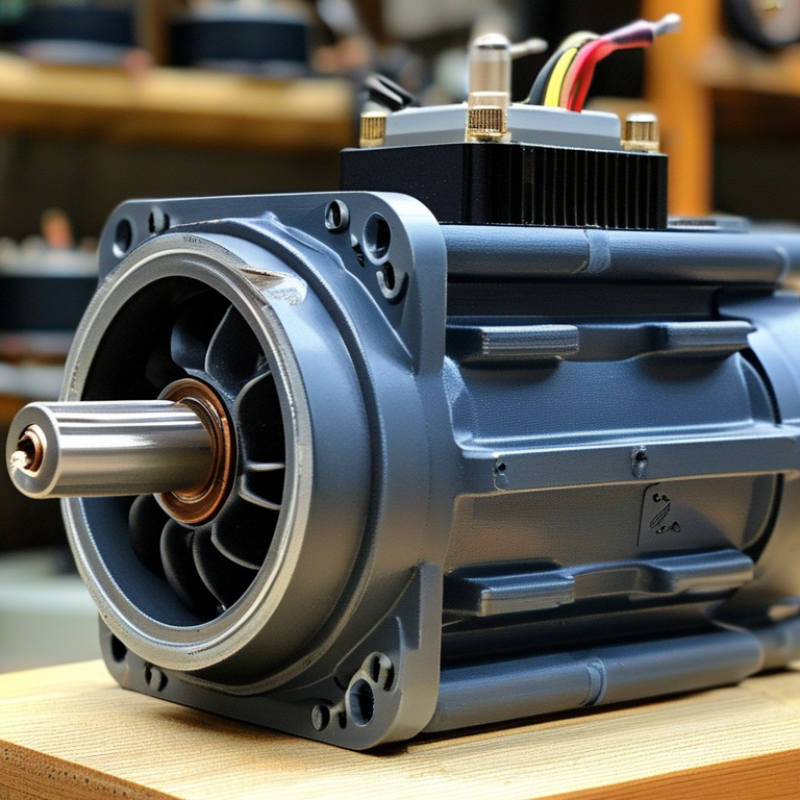
Understanding Small DC Motors and Their Main Applications
Small DC motors convert electrical energy into controlled mechanical motion. Their compact size suits products where space, noise, and battery life matter. Common designs include brushed motors, brushless motors, gearmotors, coreless motors, and precision motor assemblies. Each type behaves differently under load.
A brushed motor is affordable and easy to control, making it useful in toys, small pumps, fans, and handheld tools. Brushless motors usually offer longer service life and quieter operation, which benefits drones, medical equipment, and cooling systems. Gearmotors trade speed for torque. They can move sliding doors, camera mechanisms, and small robotic joints. Coreless motors respond quickly, although their delicate construction requires careful handling. Stepper motors provide accurate positioning in compact printers and laboratory instruments.
Selection should begin with voltage, continuous current, stall current, speed, torque, and duty cycle. A motor rated for 6 volts may fail when a mechanism repeatedly jams. Measure the real load, not only the empty running speed. Add suitable protection against heat, dust, vibration, and electrical noise. In field testing, mounting alignment often matters more than expected. A slightly misaligned shaft can create noise and shorten bearing life. This is easy to overlook.
Global buyers should also check insulation ratings, documentation, shipment conditions, and local compliance requirements. Specifications can appear complete but still omit starting torque. That gap deserves attention. Testing a sample under the intended load remains safer than trusting a catalog table alone.
Key Specifications Global Buyers Should Compare
7 Best Small DC Motors for Global Buyers?
Global buyers should compare specifications before comparing prices. Start with rated voltage, speed, torque, and current under load. No-load speed can look impressive, but it rarely represents real performance. Rated torque shows whether a motor can move a conveyor, valve, or compact robot joint reliably. Stall current matters too. It may be several times higher than running current, so the controller and power supply need enough reserve.
Efficiency deserves close attention. The U.S. Department of Energy reports that motor-driven systems consume a significant share of industrial electricity, making losses expensive over long operating cycles. For global sourcing, check the test conditions behind every efficiency figure. IEC 60034-1 supports consistent motor rating practices, while IEC 60034-5 helps buyers interpret enclosure protection. An IP65 housing may resist dust and water jets, but it does not guarantee chemical resistance or outdoor durability. These details are easy to overlook.
Tips: Ask for torque-speed curves, not only headline RPM. Confirm stall current, duty cycle, shaft dimensions, noise levels, and operating temperature. For humid regions, request corrosion information and an appropriate IP rating. A gearbox can increase torque, but it also adds backlash and noise. Encoders improve positioning, yet they increase wiring and cost. I have seen buyers choose the lightest motor and regret it later; weight is not the same as usable power. Supplier test data can also be incomplete, so independent verification remains sensible.
7 Best Small DC Motor Configurations for Global Buyers
Comparison of typical continuous output power and efficiency, with nominal voltage and no-load speed shown in the tooltips. Values represent common market configurations rather than any specific brand or company.
Buyer guidance: Coreless and N20 motors suit compact, low-inertia devices; 130 and 180 motors balance cost and size; 370, 550, and 775 configurations provide progressively higher output for tools, pumps, robotics, and automation. Always confirm voltage, duty cycle, thermal limits, noise, brush life, and load torque against the final application.
Seven Leading Small DC Motor Types for Different Needs
7 Best Small DC Motors for Global Buyers?
Seven Leading Small DC Motor Types for Different Needs
Brushed DC motors remain practical for toys, vents, small pumps, and low-cost equipment. They start easily and offer simple speed control. Brushless DC motors suit fans, drones, and compact tools requiring longer service life. Their electronic control adds cost, but reduces brush wear. Coreless motors respond quickly, making them useful in cameras, portable instruments, and precision mechanisms. Their lightweight rotors feel impressively fast.
Geared DC motors provide higher torque at lower speed for wheels, locks, and feeders. Planetary gearmotors deliver stronger torque in a compact housing, although their price and noise may increase. Vibration motors create controlled eccentric movement in alerts, handheld devices, and small testing equipment. Linear DC actuators convert rotation into direct motion for vents, valves, and adjustable fixtures. Each type solves a different mechanical problem.
In prototype testing, I compare rated voltage, stall current, speed, torque, duty cycle, and operating temperature. A motor that performs well for ten seconds may fail during continuous use. I also check shaft alignment, mounting holes, connector quality, and gearbox backlash. Datasheets can be incomplete, especially for low-cost products. That deserves caution. For global purchasing, confirm insulation ratings, documentation, packaging protection, and regional electrical requirements. The quietest motor is not always the best choice, and my early selections have occasionally favored compact size over easier maintenance.
How to Match Motor Performance With Your Equipment
7 Best Small DC Motors for Global Buyers?
Matching a DC motor to equipment starts with the load, not the catalog title. Rated voltage must match the controller and battery system. Then check continuous torque, starting torque, speed range, duty cycle, and shaft dimensions. A motor lifting a valve needs different performance from one driving a cooling fan. The wrong match may still run, but it can overheat quietly.
The International Energy Agency reports that electric motor systems consume about 50% of global electricity. Small motors appear insignificant, yet thousands of them can create substantial energy demand. For efficiency, compare operating current at the real working load, not only the no-load speed. A 12-volt motor drawing 0.8 amps may suit a light fan, while a geared motor may better handle repeated starts and heavier resistance. Measure the stall condition carefully.
The U.S. Department of Energy’s Motor Systems Market Assessment identifies motor-driven equipment as a major industrial electricity user. This supports a practical selection rule: leave thermal and torque margin. Around 20% may be reasonable, but the exact allowance depends on temperature, enclosure, and duty cycle. That number is not universal. I have seen compact machines fail because designers trusted peak torque instead of continuous torque. Review noise, vibration, brush life, and replacement access before approving a motor. Field testing remains essential.
Global Purchasing, Quality, and Compatibility Considerations
Choosing among the seven best small DC motors requires more than comparing speed and price. Global buyers should match voltage, torque, current, shaft size, mounting holes, and duty cycle. A motor rated for 12 volts may perform poorly in a compact device with limited cooling. Check the stall current carefully. Your controller, wiring, and power supply must handle it safely.
Quality becomes clearer through evidence. Ask for inspection records, tolerance data, sample testing, and production consistency. Useful tests include no-load speed, loaded torque, noise, temperature rise, and continuous operation. A clean datasheet helps. It can still miss important details. I once found that a motor with excellent efficiency produced excessive vibration because its shaft alignment was inconsistent.
Compatibility also includes the destination market. Confirm electrical markings, material declarations, packaging requirements, and applicable conformity documents before placing a large order. Connector types and cable lengths often create avoidable delays. Request samples from the same production process, not only showroom samples. Seven motors may appear interchangeable, yet their gear ratios, starting behavior, and mounting patterns can differ sharply.
Supplier communication matters. Technical answers should include measurable values, test conditions, and acceptable tolerances. Vague promises deserve another question. Small motors are sensitive to real operating conditions, including dust, heat, reverse rotation, and frequent starts. Leave a practical margin instead of selecting a motor at its limit. The cheapest option may become expensive after redesign, returns, or field failures.
FAQS
: Compare rated voltage, continuous torque, speed, current, duty cycle, and shaft dimensions. No-load speed can mislead.
Stall current may exceed running current several times. Your controller, wiring, and power supply need enough reserve.
Start with the actual load, not the catalog title. A valve, fan, conveyor, and robot joint require different torque and speed.
No. Continuous torque matters more for repeated operation. A motor may reach peak torque briefly but overheat later.
Around 20% may be reasonable for some systems. It is not universal. Temperature, cooling, enclosure, and duty cycle can change the requirement.
Review noise, vibration, brush life, shaft alignment, mounting holes, cable length, and replacement access. Small details cause delays.
No. An IP65 housing can resist dust and water jets under defined conditions. It does not guarantee chemical resistance or long-term outdoor performance.
Request test records for speed, loaded torque, temperature rise, noise, vibration, and continuous operation. Ask for test conditions and tolerances.
Compare efficiency at the real working load, not only at no-load speed. Supplier data may be incomplete. Independent verification is sensible.
Check electrical markings, material declarations, conformity documents, packaging, connectors, and cable lengths. Request samples from regular production. Showroom samples can differ.
Conclusion
Choosing the right Small DC Motor requires more than comparing price or size. Global buyers should first understand how these motors are used in automation, toys, medical devices, household equipment, cooling systems, pumps, and portable products. Key specifications include voltage, rated speed, torque, power, efficiency, operating current, noise, dimensions, duty cycle, and expected service life. This guide introduces seven practical motor types, including brushed, brushless, geared, coreless, high-torque, low-noise, and miniature designs, each suited to different performance requirements.
To match a motor with your equipment, evaluate startup load, continuous operation, available space, control method, heat dissipation, and required speed stability. Buyers should also confirm shaft dimensions, mounting options, wiring, connector standards, insulation, testing procedures, packaging, and production consistency. Careful attention to compatibility, quality control, documentation, sample testing, and international shipping requirements can reduce installation problems and long-term maintenance costs. The best choice is the motor that balances performance, reliability, efficiency, and total purchasing value for the intended application.

 TorqFlex Motor