How to Choose a Durable DC Motor for Your Application?

Time:2026-10-19 Author:Sophia
0%

Choosing a Durable DC Motor is not simply a matter of comparing speed, voltage, and purchase price. In real applications, the motor faces starting loads, repeated stops, dust, vibration, and heat. A conveyor motor may run for twelve hours daily, while a battery-powered actuator may operate only a few seconds per cycle. These conditions demand different designs. That shortcut often fails. Engineers should define torque, duty cycle, ambient temperature, shaft load, noise limits, and available space before selecting a model. A motor that performs well on a clean test bench may struggle inside a warm, enclosed machine.

Practical experience shows that durability depends on more than the motor body. Check bearing quality, brush and commutator design, winding insulation, gearbox strength, and thermal protection. For outdoor or dusty equipment, examine the enclosure rating and sealing details. For frequent reversals, confirm the motor’s current capacity and braking requirements. Reliable manufacturers should provide verified curves, life-test information, efficiency data, and clear operating limits. Independent certifications can support confidence, but they do not replace application-specific testing. Small details matter. A slightly undersized motor may overheat during every startup, even when its rated speed looks correct. Conversely, an oversized motor can increase cost, weight, and control complexity. I have seen specifications appear sufficient until real vibration exposed a weak mounting point. Therefore, leave a sensible safety margin, test the motor under realistic conditions, and review the results honestly. Some assumptions will be wrong. That is useful. A careful selection process helps ensure the chosen Durable DC Motor delivers stable performance, predictable maintenance, and a longer service life.
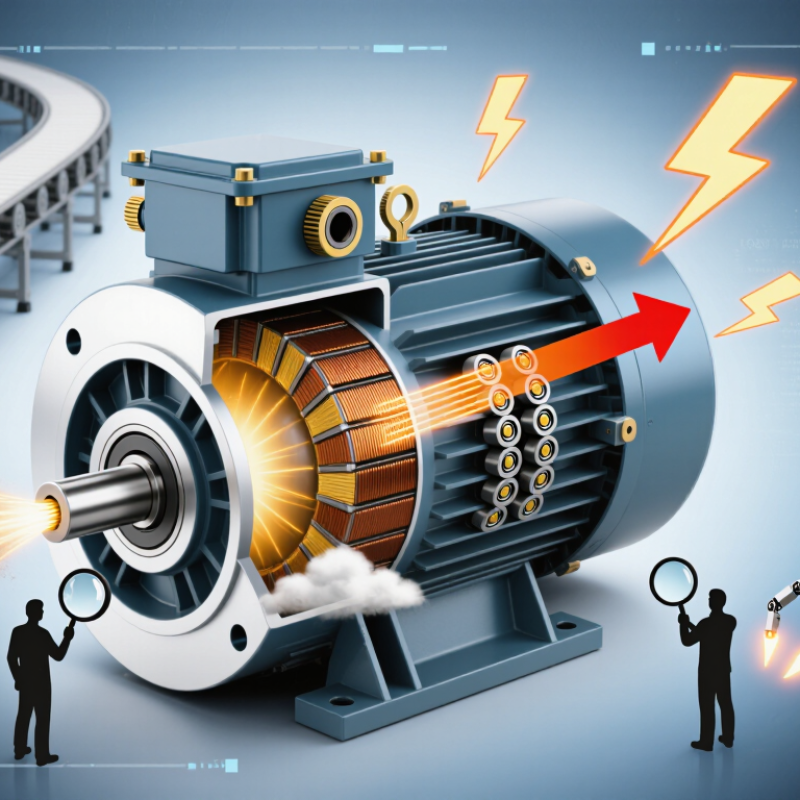
How to Choose a Durable DC Motor for Your Application?

Define Application Load and Duty Cycle Using IEC 60034-1 S1–S9

How to Choose a Durable DC Motor for Your Application?

Define Application Load and Duty Cycle Using IEC 60034-1 S1–S9

Motor durability begins with the real load, not the catalog power rating. The International Energy Agency reported in Energy Efficiency 2024 that electric motor systems consume roughly half of global electricity. Small selection errors can therefore waste energy and shorten service life. Record torque, speed, acceleration, starts per hour, braking events, and ambient temperature. Measure these values during the hardest operating period. A neat spreadsheet can still be wrong.

IEC 60034-1 classifies duty cycles from S1 to S9. S1 means continuous operation until thermal stability. S2 describes short-time operation followed by cooling. S3 covers repeated load and rest periods. S4–S8 add starting, braking, speed changes, or periodic load variation. S9 represents non-periodic changes. These categories matter because copper loss rises with current, while repeated starts create sharp thermal stress. Do not select an S1 motor for an S4 conveyor without checking heating limits.

Calculate equivalent torque or current across the complete cycle. Then compare the result with the motor’s continuous and peak ratings. Include gearbox efficiency and startup inertia. In field testing, a motor may survive the first week but overheat after hundreds of cycles. That is the uncomfortable part. Real duty patterns are often messier than specifications suggest. The U.S. Department of Energy’s Motor Systems Market Assessment also identifies motor-driven equipment as a major share of industrial electricity use, making efficiency and cooling important design checks. Verify temperature rise with sensors, and leave practical margin for dust, voltage variation, and imperfect maintenance.

Match Torque, Speed, and Power with T = 9550P/n for Motor Sizing

How to Choose a Durable DC Motor for Your Application?

Durability starts with correct sizing, not with a larger motor. Use T = 9550P/n, where T is torque in newton-metres, P is mechanical power in kilowatts, and n is speed in revolutions per minute.

For example, a 2 kW motor running at 1,500 rpm produces about 12.7 Nm. If the load needs 20 Nm, this selection is inadequate, even if the motor starts successfully.

Continuous loads, starting loads, and shock loads require separate checks. Measure the real load when possible. A conveyor may need high starting torque, while a fan usually needs smoother acceleration.

The U.S. Department of Energy reports that motor-driven equipment uses more than half of industrial electricity in the United States. Small sizing errors can therefore increase heat, energy use, and brush wear.

IEC 60034-1 also emphasizes thermal limits, duty ratings, and operating conditions.

In practice, dust, vibration, and poor cooling often shorten motor life faster than electrical overload. This is easy to underestimate.

Tips: Keep a 10–20% torque margin, but do not oversize blindly. Check ambient temperature, duty cycle, gearbox efficiency, and controller limits. Review the calculation after testing. Real machines behave imperfectly. A tachometer and clamp meter can reveal problems that a datasheet hides. The IEA has repeatedly identified motor-system efficiency as a major industrial energy opportunity, so efficient sizing supports both reliability and operating cost.

Select Insulation and Cooling for Class F 155°C Thermal Limits

Choosing a durable DC motor starts with its thermal design, not its label. Class F insulation is rated for a 155°C maximum insulation-system temperature under defined conditions. That number is a limit, not a target. Real selection must consider ambient temperature, load profile, starting current, altitude, and enclosure airflow. A motor running near its limit may survive testing yet age quickly in service. Keep margin where possible.

For dusty or enclosed equipment, insulation alone cannot remove heat. A finned frame, forced air, or separate blower can reduce winding temperature. Match cooling to the duty cycle. Intermittent operation may allow recovery periods, while continuous torque needs steady heat removal. Check temperature-rise data and test methods against IEC 60085 terminology. Measure winding resistance during trials; it reveals heating better than touch. Touch is misleading.

In practice, inspect hot spots near the commutator, bearings, and cable entry. Poor ventilation often causes failure before the insulation rating is reached. Sealed housings protect against dust, but they can trap heat. This trade-off is easy to miss. A cool workshop can also create false confidence. Test at the highest expected ambient temperature, and add thermal sensors when overloads are possible. Real duty cycles rarely match the spreadsheet perfectly.

How to Choose a Durable DC Motor: Insulation Class and Cooling

Class F insulation is rated for a maximum winding-system temperature of 155°C. At a 40°C ambient temperature, the theoretical temperature-rise allowance is 115°C before applying application-specific safety margins, hot-spot limits, and service-factor requirements.

Use Class F insulation with an appropriate cooling method when continuous operation, high load, restricted airflow, or frequent acceleration can increase winding temperature. Forced-air or liquid cooling may improve heat rejection, but the final motor rating must be verified from measured temperature rise and the manufacturer’s thermal design data.

Verify Enclosure Protection Through IEC 60529 IP Ratings

A durable DC motor begins with its enclosure, not only its torque or service life. In dusty workshops, I check the IEC 60529 IP rating before reviewing mounting details. The first digit describes protection against solid objects. A 6 means the enclosure is dust-tight. The second digit addresses water. An IP65 motor resists water jets, while IP67 supports temporary immersion under specified conditions. Those ratings are not interchangeable. Read the test conditions.

Match the rating to the real installation. A conveyor motor near a washdown area may face angled spray, detergent, and repeated thermal cycling. IP65 could suit spray exposure, yet it may not tolerate immersion after drainage fails. A motor inside a sealed cabinet may need less water protection but better heat dissipation. Check cable glands, shaft seals, connectors, and mounting joints. One weak opening can reduce practical protection. Inspect the rating documentation, not just a label.

I also treat IP testing as a controlled snapshot. It does not prove resistance to salt, oil, vibration, UV exposure, or corrosion. That distinction is easy to miss. Ask whether the test used a complete motor assembly. Confirm the operating temperature and installation orientation. During maintenance, look for cracked seals, loose covers, and blocked vents. Small damage matters. My own selection process is not perfect; I have sometimes focused too heavily on the highest IP number. A lower rating with proper drainage and maintenance may perform better. Reconsider the environment after installation, especially when cleaning methods change.

How to Choose a Durable DC Motor for Your Application? - Verify Enclosure Protection Through IEC 60529 IP Ratings

IP ratings describe the protection provided by an enclosure against solid objects and water under IEC 60529. Confirm the complete motor assembly, connectors, cable glands, shaft seals, and installation conditions before selection.
IP Rating Solid-Object Protection Water Protection Typical Application Environment Durability Selection Guidance
IP20 Protected against solid objects larger than 12.5 mm; no finger protection against hazardous parts. No protection against water. Clean, dry indoor equipment installed inside a separate enclosure. Use only where dust, moisture, and accidental contact are controlled. Additional system-level protection may be required.
IP23 Protected against solid objects larger than 12.5 mm. Protected against water spray up to 60° from the vertical. Sheltered indoor or outdoor locations with limited exposure to rain and spray. Not suitable for dusty areas or direct water jets. Prevent water from entering through ventilation openings.
IP44 Protected against solid objects larger than 1 mm. Protected against water splashes from all directions. General indoor machinery and sheltered locations with occasional splashing. Suitable for moderate exposure, but it is not dust-tight and should not be exposed to water jets or immersion.
IP54 Dust protected; limited dust ingress is permitted but must not interfere with operation. Protected against water splashes from all directions. Indoor industrial areas with airborne dust and occasional moisture. A practical minimum for many dusty industrial applications. Check whether dust buildup can affect cooling or brushes.
IP55 Dust protected; limited dust ingress is permitted but must not interfere with operation. Protected against water jets from any direction. Industrial equipment exposed to dust, cleaning splashes, or moderate hose spray. Often appropriate where water jets may occur, but it does not provide immersion protection.
IP56 Dust protected; limited dust ingress is permitted but must not interfere with operation. Protected against powerful water jets. Outdoor or industrial equipment exposed to heavy spray and severe weather. Choose when exposure is more severe than ordinary water jets. Verify drainage and corrosion resistance separately.
IP65 Dust-tight; no dust ingress is permitted. Protected against water jets from any direction. Dusty production areas, outdoor machinery, and equipment subject to routine washdown. A strong choice for dusty and wet conditions, provided the motor is not exposed to immersion or high-pressure cleaning.
IP66 Dust-tight; no dust ingress is permitted. Protected against powerful water jets. Outdoor industrial systems exposed to dust, storms, and powerful washdown. Preferable where high-pressure water exposure is possible. Confirm that connectors and cable entries maintain the same protection level.
IP67 Dust-tight; no dust ingress is permitted. Protected against temporary immersion in water under specified test conditions, commonly up to 1 m for 30 minutes. Equipment that may be temporarily flooded, dropped into water, or exposed to deep splashing. Suitable for temporary immersion, but not automatically suitable for continuous underwater operation or powerful water jets.
IP68 Dust-tight; no dust ingress is permitted. Protected against continuous or extended immersion under conditions specified by the equipment manufacturer. Submersible equipment or installations where prolonged immersion is expected. Verify the permitted depth, duration, water temperature, and installation orientation; IP68 conditions are not universally identical.
IP69 Dust-tight; no dust ingress is permitted. Protected against high-pressure and high-temperature water jets as defined by the test method. Equipment requiring intensive hygienic or industrial washdown. Select only when the complete motor assembly is tested for this exposure; verify chemical compatibility and thermal cycling resistance.
Selection reminder: The IP code does not specify motor power, speed, thermal class, bearing life, corrosion resistance, shock resistance, or protection against chemicals. For a durable DC motor, also verify rated voltage, continuous and peak torque, duty cycle, operating temperature, cooling method, shaft-load limits, connector sealing, cable-gland installation, and maintenance requirements.

Compare Efficiency, Bearing L10 Life, and Service Factors for Durability

How to Choose a Durable DC Motor for Your Application?

Durability begins with efficiency, but efficiency alone does not guarantee long service. A motor running at 88% efficiency wastes less energy as heat than one running at 78%. That difference matters inside a sealed enclosure. Lower temperature usually protects insulation, grease, and nearby electronics. Check efficiency at your real operating point, not only at the rated load. A motor may perform well on paper, yet overheat during frequent starts.

Bearing L10 life deserves equal attention. It is the calculated life that 90% of identical bearings should reach under stated conditions. It is not a promise for every motor. Shaft misalignment, belt tension, shock loads, and dust can reduce actual life sharply. Compare the bearing’s basic load rating with your radial and axial forces. Also review speed, lubrication, sealing, and mounting accuracy. Small details matter.

Service factors connect the motor to its working environment. Consider starts per hour, daily operating time, reversing cycles, ambient temperature, and unexpected overloads. A conservative service factor can improve reliability, but excessive sizing may increase cost and reduce efficiency. The balance is not always obvious. I would test a candidate motor with a thermal probe, measured current, and realistic load cycles. Datasheets help, but field measurements often reveal the uncomfortable truth. Recheck the design if noise, vibration, or temperature rises beyond the expected range.

FAQS

What information should I record before choosing a durable DC motor?

Record torque, speed, acceleration, starts per hour, braking events, and ambient temperature. Measure the hardest operating period. A tidy spreadsheet can still mislead.

What does duty cycle mean for motor selection?

Duty cycle describes how long the motor runs, rests, starts, brakes, or changes speed. Heating depends on the complete operating pattern. Real cycles are often messy.

How do S1 to S9 duty types affect motor choice?

S1 covers continuous operation until thermal stability. S2 covers short operation and cooling. S3 includes repeated running and resting.

Why should I avoid selecting a continuous-duty motor automatically?

Repeated starts can create sharp thermal stress. A motor may survive one week, then overheat after hundreds of cycles. Check heating limits carefully.

How can I calculate the required motor capacity?

Calculate equivalent torque or current across the entire cycle. Compare it with continuous and peak ratings. Include gearbox efficiency and startup inertia.

What environmental details can shorten motor life?

Dust, voltage variation, poor maintenance, and restricted cooling can increase stress. Use temperature sensors during testing. Leave practical operating margin.

What do the two numbers in an IP rating describe?

The first digit describes solid-object protection. The second digit describes water protection. A higher number is not automatically better for every installation.

Is an IP65 motor suitable for every wet location?

IP65 resists water jets under specified test conditions. IP67 supports temporary immersion under specified conditions. These ratings are not interchangeable.

Which motor parts should I inspect besides the enclosure rating?

Check cable glands, shaft seals, connectors, covers, and mounting joints. One weak opening can reduce practical protection. Inspect the complete assembly documentation.

Does a high IP rating prove resistance to every harsh environment?

No. IP testing does not prove resistance to salt, oil, vibration, ultraviolet exposure, or corrosion. Confirm temperature and installation orientation.

Conclusion

Choosing a Durable DC Motor starts with understanding the application’s real operating conditions. Define the expected load, starting requirements, operating hours, and duty cycle according to IEC 60034-1 categories S1–S9. Then match motor torque, speed, and power using the relationship T = 9550P/n, ensuring the selected motor can handle both continuous demand and temporary overloads without excessive heating or performance loss.

Thermal management and environmental protection are equally important. Select insulation suitable for Class F limits of 155°C and choose an effective cooling method for the installation space. Check the enclosure’s IEC 60529 IP rating to confirm protection against dust and moisture. Finally, compare efficiency, bearing L10 life, and service factors to estimate long-term reliability. A motor with appropriate thermal capacity, mechanical strength, and operating margin will deliver more stable performance, reduce maintenance needs, and provide better durability throughout its service life.

Sophia

Sophia

Sophia is a dedicated marketing professional with an exceptional depth of knowledge about her company's products and services. With a keen understanding of market trends and customer needs, she crafts insightful blog posts that not only inform but also engage readers, enriching the company’s online......