DC motors are fundamental components in various applications, from household appliances to industrial machinery. Reports from industry experts indicate that the global DC motor market is projected to reach $19.5 billion by 2026. This growth reflects the increasing demand for automation and electric vehicles, where DC motors play a crucial role.
Understanding how a DC motor works is essential for anyone involved in engineering or manufacturing. A DC motor converts electrical energy into mechanical energy, utilizing electromagnetic principles. The simplicity of its design allows for easy control and efficient operation, which contributes to its popularity. However, challenges remain. Factors such as wear and tear, and efficiency losses at high speeds require careful consideration.
Despite their advantages, the reliability of DC motors can vary significantly. Each motor has its own strengths and weaknesses. Continuous innovation is necessary to meet evolving industry needs. As technology advances, so does the potential for improved performance and energy efficiency in DC motors. The future of this technology promises exciting developments while also posing challenges for manufacturers and engineers alike.
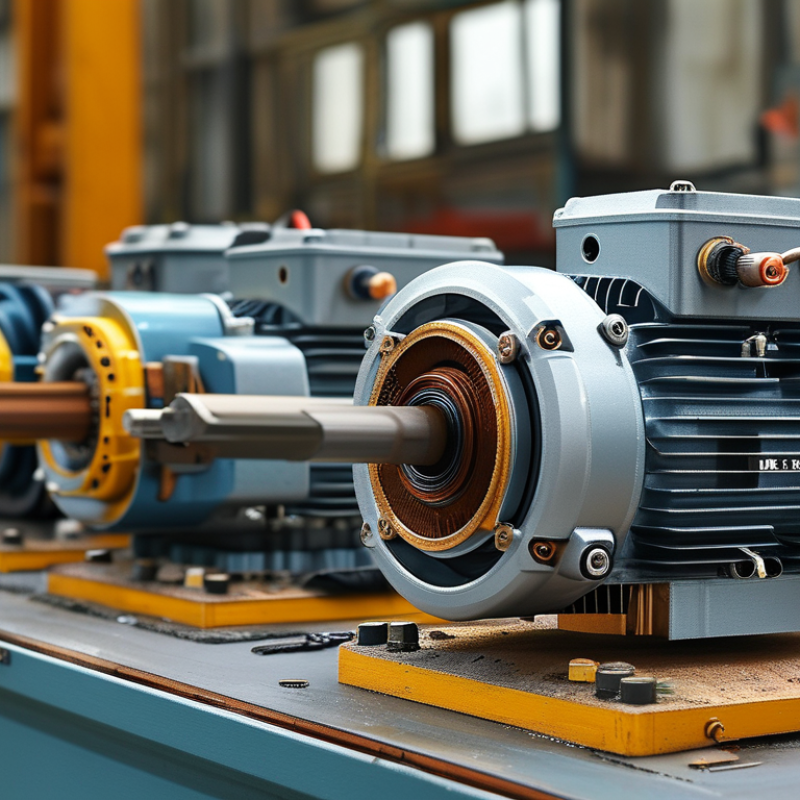
Understanding the Basics of DC Motors
DC motors, or direct current motors, are essential components in various applications. They convert electrical energy into mechanical energy. The basic operation of a DC motor relies on an electromagnet. When current flows through the wire coil, a magnetic field is generated. This interaction causes the rotor to turn.
Understanding the structure of a DC motor is crucial. It consists of a stator, rotor, and commutator. The stator provides a steady magnetic field. The rotor, or armature, spins inside this field. The commutator plays a vital role in reversing the current direction. This switching keeps the rotor turning continuously.
Despite their simplicity, DC motors have limitations. They can overheat with extended use. Efficiency drops under heavy loads. The brushes that create contact may wear out, needing replacement. These factors remind us that regular maintenance is key to a motor's longevity. Observing how these components work together enhances our understanding. It’s a fascinating journey into the world of engineering.
Key Components of a DC Motor
DC motors play a crucial role in various applications, from household appliances to electric vehicles. Understanding their key components is essential for comprehending how they operate. A typical DC motor consists of a stator, rotor, commutator, and brushes.
The stator is the stationary part. It generates a magnetic field required for the motor’s operation. The rotor, or armature, is the rotating part. It carries current and interacts with the magnetic field. This interaction produces torque, causing the rotor to spin. The commutator ensures that the current flows in the correct direction, while brushes maintain contact with the commutator, facilitating current transfer.
While these components seem simple, their efficiency is vital. Any misalignment or wear can affect performance. For example, worn brushes may lead to poor electrical contact, resulting in reduced motor efficiency. Regular maintenance is necessary for optimal performance. Understanding these components gives us a clearer insight into DC motor functionality, but the nuances of their operation can be complex and require attention to detail.
How Electromagnetism Powers DC Motors
DC motors are fascinating devices that operate using the principles of electromagnetism. They convert electrical energy into mechanical energy through the interaction of magnetic fields and current-carrying conductors. When an electric current passes through the motor's windings, it creates a magnetic field. This field interacts with magnets fixed in the motor, producing rotational motion.
The basic components of a DC motor include the stator, rotor, and commutator. The stator generates a magnetic field, while the rotor contains coils of wire. The commutator switches the direction of the current flow in the rotor coils, ensuring continuous rotation. This dynamic is key to how DC motors function effectively in various applications.
**Tip:** When troubleshooting a DC motor, check for wiring issues or damaged components. Ensuring proper connections can prevent performance problems.
Understanding electromagnetism's role in DC motors is crucial. The strength of the magnetic field and the amount of current directly influence motor efficiency and speed. Always consider these factors when designing or selecting a motor for specific tasks.
**Tip:** Regular maintenance can enhance motor lifespan. Lubricate moving parts and inspect for wear to keep the motor running smoothly.
What is a DC Motor and How Does it Work? - How Electromagnetism Powers DC Motors
| Component |
Function |
Material |
Importance |
| Stator |
Provides a magnetic field |
Iron or Steel |
Essential for generating torque |
| Rotor |
Turns within the stator's magnetic field |
Copper windings |
Converts electrical energy to mechanical energy |
| Commutator |
Reverses current direction in rotor windings |
Copper segments |
Maintains continuous rotation |
| Brushes |
Maintain electrical contact with the commutator |
Carbon or graphite |
Ensures current flows into the rotor |
| Power Supply |
Provides the electrical energy |
DC voltage source |
Drives operation of the motor |
Control Mechanisms for DC Motor Operation
DC motors are widely used in various applications due to their simplicity and efficiency. Control mechanisms play a vital role in ensuring these motors operate effectively. The most common methods involve varying voltage and current to regulate motor speed and torque.
Pulse Width Modulation (PWM) is a popular technique. It uses short pulses to control the amount of power delivered to the motor. By changing the duty cycle, we can finely tune the motor's performance. This method can lead to energy savings and improved control, but it requires careful implementation.
Another effective control method is the use of feedback systems. Sensors can monitor speed and position, allowing real-time adjustments. This feedback loop enhances precision but increases system complexity. Effective control often involves balancing simplicity and performance. Not every application will benefit from advanced controls. Sometimes, basic control might just be enough.
Applications of DC Motors in Various Industries
DC motors are widely utilized in various industries due to their efficiency and versatility. These motors are essential in manufacturing, robotics, and automotive applications. In factories, DC motors power conveyor belts, enabling smooth material handling. They also drive electric tools, enhancing productivity and precision in tasks.
In the automotive sector, DC motors are key components in electric and hybrid vehicles. They control everything from window lifts to cooling fans. This versatility demonstrates their adaptability across different automotive systems. Moreover, in robotics, DC motors allow for accurate movement and positioning, crucial for automated processes.
**Tip:** Consider the voltage requirements when selecting a DC motor. Voltage variation affects performance and efficiency significantly. Testing different voltages can reveal optimal operational levels.
DC motors also find applications in household appliances. They are used in fans, washing machines, and vacuum cleaners. Their consistent power output ensures these devices perform reliably. However, improper usage or overload can lead to motor damage.
**Tip:** Regular maintenance is vital for longevity. Keep motors clean and inspect connections. Regular checks can prevent unexpected failures.
Applications of DC Motors in Various Industries
FAQS
: A DC motor converts electrical energy into mechanical energy using an electromagnet.
The main components include the stator, rotor, commutator, and brushes.
When current flows, the rotor spins within a magnetic field, producing torque.
The commutator reverses current direction, allowing continuous rotation of the rotor.
They are used in manufacturing, robotics, automotive systems, and household appliances.
Regular maintenance prevents overheating, brush wear, and improves motor longevity.
Overuse may lead to overheating and reduced efficiency under heavy loads.
Voltage variation impacts performance; testing different voltages is crucial for optimal operation.
Yes, overload or incorrect usage can result in damage and reduced efficiency.
Knowing the structure aids in troubleshooting and enhancing the motor's performance.
Conclusion
A DC Motor, or Direct Current Motor, is a widely used electrical machine that transforms electrical energy into mechanical energy through the principles of electromagnetism. Understanding the basics of its operation involves recognizing key components such as the rotor, stator, and commutator, which work together to create rotational movement. Electromagnetism plays a crucial role in powering DC Motors, where energetic magnetic fields interact with electric currents to produce motion.
Various control mechanisms, including speed controllers and feedback systems, enable precise operation of DC Motors, making them suitable for diverse applications across industries. From automotive to robotics, their versatility and efficiency allow them to serve essential functions in powering tools, conveyors, and numerous other devices. As technology advances, the role of DC Motors continues to expand, solidifying their importance in modern machinery and automation.

 TorqFlex Motor