Choosing an Industrial Gear Motor in 2026 requires more than comparing catalog prices.
A reliable selection begins with the machine’s real operating conditions. Measure required torque, output speed, duty cycle, starting load, and available installation space. A conveyor carrying wet aggregate needs a different solution from a clean packaging line. Dust, washdown water, heat, vibration, and frequent reversing can quickly expose a weak specification.
Dr. Heinz P. Bloch, a respected rotating-equipment authority, emphasizes a practical principle: “Proper selection, installation, and maintenance determine equipment reliability.” That principle remains highly relevant to Industrial Gear Motor selection. A motor may appear efficient on paper, yet fail early when its service factor is too small or its gearbox cannot handle shock loading.
The best choice also considers motor efficiency, gearbox type, thermal capacity, brake requirements, noise, controls, and spare-parts access. Helical, bevel, worm, and planetary designs each offer different compromises. Worm gearboxes can be compact, but their efficiency may disappoint under continuous operation. Planetary units deliver high torque density, although purchase and maintenance costs may rise.
Do not trust one spreadsheet alone.
Ask suppliers for verified performance data, duty ratings, protection levels, and installation limits. Review the application with a qualified engineer, especially when safety or continuous production matters. I have seen specifications overlook cold starts, misalignment, or cleaning chemicals. Those details seem minor. They are not.
This guide will examine practical selection steps, common mistakes, modern efficiency expectations, and the evidence needed before purchasing an Industrial Gear Motor in 2026.
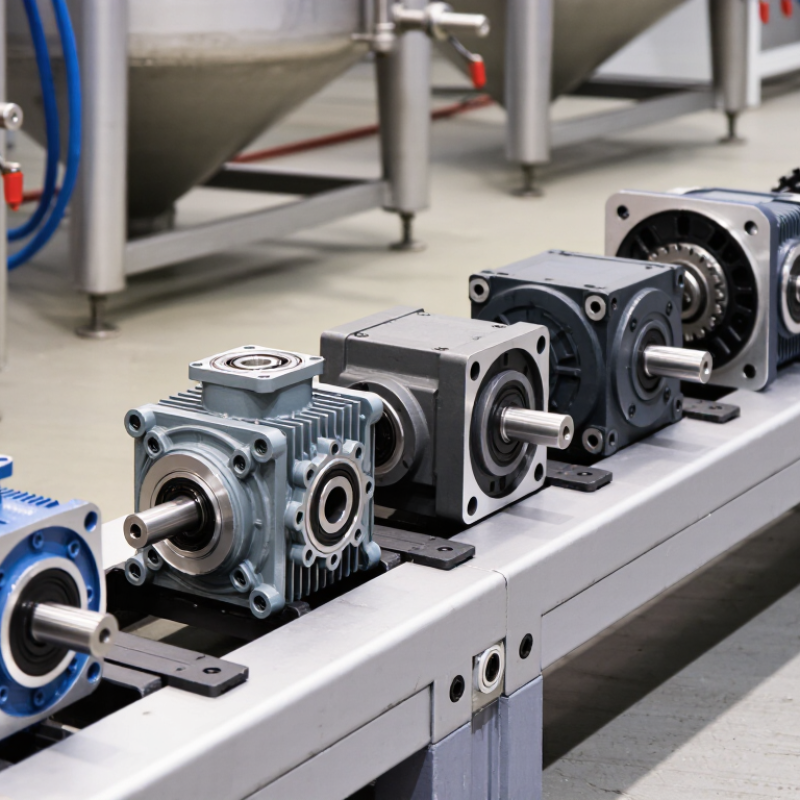
An industrial gear motor combines an electric motor with a gearbox to deliver controlled torque at a useful speed. The motor creates rotation. Gears reduce speed and multiply torque through meshing teeth, while shafts transfer motion to the driven machine. Inside, bearings support rotating parts, seals retain lubricant, and the housing protects the assembly from dust and impacts. Output speed depends on motor speed and the reduction ratio. A higher ratio usually increases torque, but efficiency may fall. That tradeoff is easy to overlook.
To choose one in 2026, start with load torque, required output speed, duty cycle, and starting conditions. Measure the real load, not only the catalog estimate. Conveyor starts, frequent reversals, and shock loads require extra attention. Check thermal capacity because continuous operation can overheat a compact unit. Mounting position, shaft direction, ambient temperature, and ingress protection also affect performance. I have seen failures caused by alignment errors rather than weak gears. That detail matters. Ask qualified suppliers for torque curves, service factors, noise data, and maintenance instructions.
Tips: Do not choose by horsepower alone. Confirm the output torque at the actual speed. Leave practical space for inspection and oil changes. A small safety margin is sensible, but oversized units waste energy and money. Recheck the calculation when the machine layout changes. It happens more often than expected.
| Selection Dimension | What It Means | Typical Industrial Data | How to Use It in 2026 |
|---|---|---|---|
| Definition | An industrial gear motor is an electric motor integrated with a gearbox to reduce speed and increase output torque. | Common systems combine an AC or DC motor with spur, helical, bevel, worm, or planetary gearing. | Select the motor and gearbox as one matched drive system rather than sizing either component separately. |
| Operating Principle | The motor produces rotational power, while gear ratios reduce output speed and multiply torque. | Output speed ≈ motor speed ÷ reduction ratio; output torque depends on motor torque, ratio, and efficiency. | Use the actual load speed, starting torque, duty cycle, and required acceleration—not motor power alone. |
| Motor Speed | The motor’s rotational speed before gear reduction. | Typical three-phase induction motors operate near 1,500 rpm at 50 Hz for four-pole designs and near 1,800 rpm at 60 Hz, with actual speed varying by slip. | Confirm supply frequency, motor pole count, and variable-frequency-drive settings before calculating the ratio. |
| Reduction Ratio | The ratio between input speed and output speed. | Industrial gearboxes commonly cover ratios from approximately 3:1 to more than 300:1, depending on the gear arrangement and number of stages. | Choose a ratio that delivers the required output speed while keeping the motor within its permitted operating range. |
| Output Torque | The turning force available at the gearbox output shaft. | Torque can be estimated with T = 9550 × P ÷ n, where T is N·m, P is kW, and n is rpm. | Size for continuous torque plus acceleration, incline, friction, shock, and any intermittent peak load. |
| Service Factor | A multiplier that accounts for operating hours, load variation, starts, stops, and shock. | Typical application service factors are often around 1.0 to 2.0 or higher, depending on the duty and manufacturer method. | Use a higher factor for conveyors with frequent starts, crushers, mixers, reversing loads, or high-inertia equipment. |
| Gear Type: Helical | Helical teeth engage gradually, providing smooth and relatively quiet power transmission. | Typical efficiency is approximately 90%–98% per stage, depending on design, lubrication, and load. | A strong general-purpose choice for conveyors, pumps, packaging machinery, and continuous-duty systems. |
| Gear Type: Bevel-Helical | Combines helical gearing with bevel gears to transmit power through an angled shaft arrangement. | Common shaft angles include 90 degrees; efficiency is generally higher than a comparable worm reducer. | Consider it when the machine layout requires a right-angle drive with good efficiency and high continuous torque. |
| Gear Type: Worm | Uses a worm screw and worm wheel, usually providing compact right-angle transmission. | Efficiency can range broadly, often about 50%–90%, depending strongly on ratio, lead angle, lubrication, and speed. | Use for moderate-power applications where compactness and cost matter; check heat generation and back-driving behavior. |
| Gear Type: Planetary | Multiple planet gears share the load around a central sun gear. | Offers high torque density, compact dimensions, and low backlash options; multi-stage efficiency depends on the configuration. | Choose for robotics, servo axes, indexing, high acceleration, and applications requiring precise motion control. |
| Duty Cycle | The pattern of running, stopping, loading, and idling over time. | Continuous duty, intermittent duty, frequent cycling, reversing, and peak-load operation create different thermal and mechanical demands. | Specify operating hours per day, starts per hour, acceleration time, reversals, and load profile. |
| Motor Power | The rate at which the motor performs mechanical work. | Industrial gear motors are available across a wide range, from fractional-kilowatt units to systems rated at hundreds of kilowatts or more. | Avoid substantial oversizing because it can increase purchase cost, starting current, mechanical stress, and energy consumption. |
| Voltage and Frequency | The electrical supply required for correct motor operation. | Common industrial supplies include three-phase 230/400 V at 50 Hz and 460/480 V at 60 Hz, subject to regional standards and site conditions. | Match the nameplate rating to the plant supply and verify compatibility with any variable-frequency drive. |
| Efficiency and Energy Use | The proportion of electrical input converted into useful mechanical output. | Total drive efficiency equals motor efficiency multiplied by gearbox efficiency, with additional losses from seals, bearings, and controls. | Compare life-cycle energy cost, not only purchase price; use efficient motors and low-loss gearing for long operating hours. |
| Ingress Protection | The IP rating describes protection against solid particles and water ingress. | IP55 generally protects against dust ingress sufficient to prevent harmful operation and water jets; higher ratings provide greater protection. | Select the rating based on washdown, dust, humidity, outdoor exposure, and enclosure requirements. |
| Ambient Conditions | Temperature, altitude, dust, moisture, chemicals, and hazardous-area conditions affect performance and life. | Motor ratings may require derating at high ambient temperatures or elevations; lubrication also changes with temperature. | Provide site temperature, altitude, washdown chemicals, installation location, and hazardous-area classification during selection. |
| Mounting and Output Shaft | Mounting position, shaft orientation, flange dimensions, and shaft loading determine mechanical compatibility. | Common arrangements include foot-mounted, flange-mounted, hollow-shaft, solid-shaft, parallel-shaft, and right-angle designs. | Check radial force, axial force, coupling type, backstop requirements, available space, and service access. |
| Backlash and Positioning | Backlash is the angular clearance between mating gear teeth that can affect positioning accuracy. | Standard industrial reducers generally have more backlash than precision planetary or servo gearboxes. | Specify allowable backlash when the application involves indexing, robotics, CNC motion, or repeatable positioning. |
| Lubrication | Gear oil or grease reduces friction, wear, and heat inside the gearbox. | Lubricant selection depends on gear type, speed, load, temperature, mounting orientation, and food or chemical exposure. | Confirm factory fill, oil level, change interval, viscosity, leakage control, and compatibility with the installation position. |
| Noise and Vibration | Gear mesh, bearings, alignment, electrical harmonics, and mounting stiffness influence acoustic and mechanical vibration. | Helical and planetary arrangements are generally smoother than simple spur arrangements; worm drives may produce more heat at high ratios. | Set acceptable noise and vibration limits and consider condition monitoring for critical production equipment. |
| Control Compatibility | The gear motor may operate directly across the line or through a variable-frequency drive, soft starter, servo drive, or programmable controller. | Variable-frequency drives enable speed control but can affect cooling, insulation stress, bearing currents, and low-speed torque. | Verify drive compatibility, minimum speed, braking method, encoder needs, overload capability, and electromagnetic compatibility. |
| Maintenance and Monitoring | Preventive maintenance protects gears, bearings, seals, insulation, and lubrication systems. | Useful indicators include temperature, vibration, oil condition, current, speed, leakage, and abnormal noise. | For critical assets, combine scheduled inspections with sensors and trend-based maintenance to identify faults early. |
| Final Selection Checklist | A complete specification prevents under-sizing, overheating, premature wear, and installation problems. | Required inputs include power, output speed, continuous and peak torque, ratio, duty cycle, starts per hour, environment, mounting, shaft loads, voltage, frequency, IP rating, and control method. | Compare candidates by technical fit, total cost of ownership, efficiency, maintainability, spare-part availability, safety compliance, and expected service life. |
Note: Performance ranges are typical engineering reference values. Actual ratings depend on gearbox geometry, lubrication, operating speed, load profile, cooling, installation, and applicable standards.
It combines an electric motor and a gearbox. The motor creates rotation. The gears reduce speed and increase torque. Bearings support rotating parts, while seals retain lubricant. The housing protects the assembly from dust and impacts.
A higher reduction ratio usually lowers output speed. It commonly increases output torque. Efficiency may decline as the ratio rises. That tradeoff is easy to miss. Check torque at the required operating speed.
Measure load torque, output speed, duty cycle, and starting conditions. Include friction, acceleration, reversals, and shock loads. Do not rely only on catalog estimates. Real data matters more. Record the load during normal operation.
Horsepower does not show actual output torque at a specific speed. A conveyor may need high starting torque. An empty test may hide this requirement. Check continuous torque and peak torque separately. The calculation can still be wrong.
Compare full-load and part-load efficiency. Estimate annual energy use from the real duty cycle. Review bearing life, temperature, lubrication, alignment, and starts per hour. A cooler motor may last longer than a highly efficient motor under constant overload. Selection is not perfectly predictable.
Confirm mounting position, shaft direction, and coupling clearance. Check alignment before operating the machine. Show bolt details, lubrication points, and cable routes on installation drawings. Install suitable guards around moving parts. Small alignment errors can cause major failures.
Verify rated torque, thermal limits, enclosure protection, and emergency-stop compatibility. Use appropriate lockout procedures during installation and service. Check guards before every startup. A missing guard is a serious operational risk. Never treat it as a minor defect.
Record vibration, temperature, oil condition, backlash, and current draw. Set inspection intervals according to the duty cycle. Leave access for inspection and oil changes. Review unusual readings quickly. A checklist helps, but field judgment still matters.
Request torque curves, efficiency data, thermal limits, noise information, and maintenance instructions. Ask about spare-part lead times and technician response times. Confirm commissioning support, training, inspection records, and warranty limits. Get important promises in writing. A vague answer deserves reconsideration.
Choosing the right Industrial Gear Motor begins with understanding how the motor and gearbox work together to convert electrical power into controlled mechanical output. The selection process should start with a clear definition of the application, including required torque, speed, duty cycle, load characteristics, operating environment, starting conditions, and available installation space. These factors help determine the appropriate gearbox design and motor specifications for reliable performance.
A thorough comparison should consider efficiency, torque capacity, output speed, noise, heat generation, expected service life, and resistance to wear. It is also important to verify safety features, mounting requirements, lubrication needs, inspection intervals, and ease of maintenance before making a final decision. A dependable supplier should provide accurate technical information, configuration assistance, replacement parts, and responsive after-sales support. By evaluating both performance requirements and long-term operating costs, users can select an Industrial Gear Motor that delivers stable, efficient, and safe operation throughout its intended service life.

 TorqFlex Motor