Choosing the right motor for worldwide equipment is rarely a simple voltage decision. A Low Voltage DC Motor can offer efficient operation, compact design, and practical control for battery-powered systems. It can support mobile medical carts, warehouse scanners, solar tracking units, and small automated machines. These applications often work far from a stable electrical grid.
Austin Hughes, a respected motor-drive author, expressed a useful principle: “Motor selection must match the application, not merely the catalogue rating.” That view remains important for global projects. Engineers must examine torque at startup, continuous duty, heat dissipation, speed regulation, and expected battery life. A motor that performs well in a cool laboratory may struggle inside a sealed enclosure in Southeast Asia. Details matter.
Safety also deserves attention. Lower operating voltage can simplify system design and reduce exposure risks, although it does not remove the need for proper insulation, fusing, grounding, and compliance testing. Manufacturers should check regional requirements, connector standards, electromagnetic compatibility, and service availability before approving a design. A globally shipped product needs more than a universal datasheet.
There is no perfect motor.
A Low Voltage DC Motor may require higher current, thicker cables, or careful thermal planning. That weakness is easy to overlook. Still, with suitable control electronics and honest performance testing, it can deliver dependable motion across varied markets. The strongest choice is not always the cheapest unit. It is the motor that remains predictable when temperature, voltage quality, maintenance skills, and operating habits change.
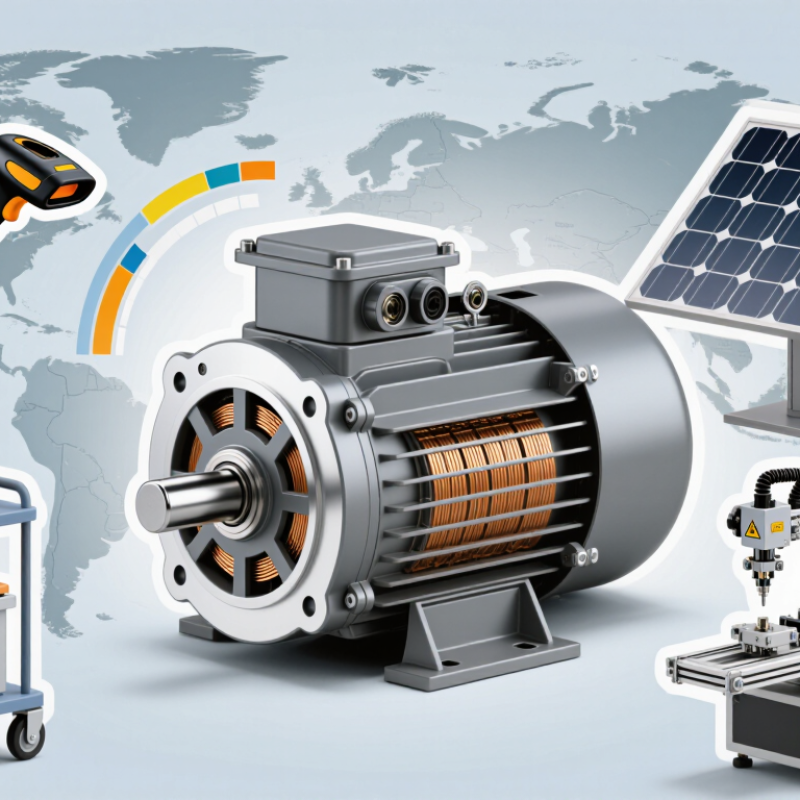
A low voltage DC motor typically runs on direct current below standard industrial mains levels. Common systems use 6, 12, 24, or 48 volts. It converts electrical energy into rotary motion through magnetic fields. Depending on its design, brushes switch current mechanically, or electronic commutation drives a brushless motor. The voltage is low, but the current may be substantial. That detail is often missed.
In practical equipment checks, a 24-volt motor can start a small conveyor smoothly. A 12-volt motor may spin a fan, pump, or positioning mechanism. Speed depends on voltage, while torque depends strongly on current and load. This makes wiring, fuses, heat, and controller selection essential. Small mistakes become warm cables. I have seen motors perform well unloaded, then struggle during repeated starts.
For global applications, low voltage DC motors simplify integration with batteries, solar systems, and mobile equipment. They can also reduce electric shock exposure, although they are not automatically risk-free. Moisture, stalled shafts, poor connectors, and incorrect polarity can still cause failures. Engineers should verify rated voltage, current, duty cycle, insulation, ingress protection, and local electrical requirements. I would not select a motor from voltage alone. Real loads vary more than spreadsheets suggest. Testing during cold starts, overloads, and repeated stopping often reveals weaknesses. That evidence matters.
How Low Voltage DC Motors Work
A low voltage DC motor converts electrical energy into mechanical rotation. Direct current enters the motor through its terminals. Inside, current flows through coils placed around a rotating rotor. The magnetic field from these coils interacts with permanent magnets or stationary electromagnets. This interaction creates torque and turns the shaft.
In brushed motors, a commutator reverses current direction as the rotor moves. Brushes transfer power to the spinning commutator. This simple arrangement offers reliable starting torque, but brushes gradually wear. Brushless motors use electronic switching instead. A controller changes the energized coils according to rotor position. This design usually reduces maintenance and improves operating life. However, it needs suitable control electronics, which can complicate installation.
Voltage affects speed, while current largely affects torque. Pulse-width modulation can adjust speed without wasting as much energy as resistive control. Engineers still need to check starting current, heat, load changes, and cable length. A motor may run smoothly during testing but stall under real conditions. That detail is easy to miss.
Tips: Match the motor’s rated voltage with the power supply. Measure starting current, not only running current. Add ventilation around enclosed motors. For global equipment, allow for different power systems by using a compatible DC supply. Keep wiring short and properly sized. Small voltage drops matter. Personally, I would test the motor with its actual gearbox and load, because laboratory results can feel overly optimistic.
| Data Dimension | Typical Value or Principle | How It Works | Global Application Benefit |
|---|---|---|---|
| Common Nominal Voltages | 6 VDC, 12 VDC, 24 VDC, and 48 VDC | The motor is designed to operate around a specified direct-current voltage. The selected voltage must match the motor and controller ratings. | These voltage levels are widely available from batteries, regulated power supplies, and industrial control systems. |
| Basic Operating Principle | Electrical energy is converted into rotational mechanical energy. | Current flowing through the motor windings creates a magnetic field. Interaction between the magnetic fields produces torque and rotation. | The same basic operating principle can be used in equipment supplied by different regional AC grids when an appropriate DC power supply is used. |
| Speed Control | Commonly controlled using pulse-width modulation (PWM). | A controller rapidly switches the DC supply on and off. The duty cycle changes the average voltage delivered to the motor, allowing speed adjustment. | PWM control supports efficient speed regulation in fans, pumps, actuators, conveyors, and mobile equipment. |
| Direction Control | Reversing polarity reverses direction in many brushed DC motors. | An H-bridge or reversing relay changes the current direction through the armature. Brushless DC motors require electronic commutation. | Bidirectional operation is useful for lifting mechanisms, positioning systems, valves, and automated doors. |
| Current at 100 W Output Power | Approximately 16.7 A at 6 V, 8.3 A at 12 V, 4.2 A at 24 V, and 2.1 A at 48 V, before losses. | Using the electrical power relationship P = V × I, current decreases as voltage increases for the same power level. | Higher low-voltage options can reduce cable current and voltage drop, which may simplify wiring over longer distances. |
| Torque and Speed Relationship | Mechanical power is approximately P = T × ω. | For a given power, increasing rotational speed generally reduces the required torque, while reducing speed requires more torque. | Motor selection can be matched to the required load profile instead of relying only on voltage or wattage. |
| Starting Current | Usually higher than the normal running current. | At startup, the rotor is stationary and back electromotive force is minimal, so the winding can draw a large current limited mainly by resistance and the controller. | Power supplies, fuses, connectors, and controllers should be selected to tolerate the motor's starting and stall-current requirements. |
| Energy Source Compatibility | Compatible with batteries, solar-storage systems, DC power supplies, and DC bus systems. | The motor receives direct current without requiring an internal AC-to-DC conversion stage. | Low-voltage DC motors are practical for portable, remote, backup-power, and renewable-energy equipment. |
| Typical Efficiency Range | Approximately 50% to 90%, depending on motor type, size, speed, load, and operating point. | Losses occur in the windings, bearings, magnetic circuit, brushes, switching electronics, and mechanical load. | Selecting a motor near its efficient operating point can reduce heat generation and energy consumption. |
| Brushed DC Motor Maintenance | Brushes and commutators are wear components. | Mechanical brushes transfer current to the rotating armature and may produce electrical noise and gradual wear. | Brushed motors can be simple and cost-effective, but brush life and electromagnetic compatibility should be considered. |
| Brushless DC Motor Maintenance | No mechanical brushes; requires an electronic controller. | Electronic switching energizes the stator phases in sequence while permanent magnets rotate with the rotor. | Brushless designs can provide longer service life, lower maintenance, and improved suitability for continuous-duty applications. |
| Thermal Management | Heat generation increases with current and load. | Winding losses are approximately proportional to I²R, where I is current and R is winding resistance. | Correct sizing, ventilation, heat sinking, and overload protection improve reliability across different climates. |
| Protection Requirements | Overcurrent, overtemperature, undervoltage, and stall protection may be required. | Protection devices limit damage caused by locked rotors, blocked loads, incorrect wiring, or abnormal operating conditions. | Standardized protection improves safety and helps equipment operate consistently in varied installation environments. |
| Voltage Drop Consideration | Voltage drop increases with current, cable resistance, and cable length. | The relationship can be expressed as Vdrop = I × R. A lower voltage at the motor can reduce speed and available torque. | Appropriate cable sizing and connector selection are important, especially in battery-powered and long-distance installations. |
| Environmental Adaptability | Performance depends on enclosure, insulation, bearings, sealing, and temperature rating. | The motor itself is not automatically suitable for every environment; protection must be selected for dust, moisture, vibration, and temperature. | Configurable protection levels allow low-voltage DC motors to be integrated into indoor, outdoor, mobile, and industrial equipment. |
The values shown are representative engineering ranges and calculations, not universal motor ratings. Always verify the motor datasheet, controller limits, wiring requirements, and applicable electrical safety standards before installation.
Low voltage DC motors fit modern global equipment because they connect easily with batteries, solar panels, and compact controllers. A 24 V motor can power a mobile pump, warehouse conveyor, or medical device without a large inverter. This simplifies installation where grid access is limited. The International Energy Agency estimates that electric motor systems consume about 46% of global electricity. Even modest efficiency improvements can therefore influence operating costs across many markets.
Control is another practical advantage. DC motors provide responsive speed adjustment, which helps conveyors move fragile packages without sudden starts. Their low-voltage design can also reduce electrical risk during servicing, although proper protection remains essential. The U.S. Department of Energy reports that motor-driven systems represent a major share of industrial electricity use, often near 70%. Engineers should examine the complete system, not only the motor. Poor wiring, undersized controllers, and continuous overload can erase expected savings.
Global deployment still requires careful adaptation. Battery voltage, ambient temperature, duty cycles, and local safety standards differ widely. A motor tested in a dry workshop may behave differently in humid coastal equipment. Field teams often discover this late. That is an avoidable weakness. IEC 60034 performance and testing guidance can support more consistent evaluation, but compliance does not guarantee perfect field results. Designers should document load profiles, cooling conditions, protection settings, and replacement requirements before approving a low voltage DC motor for international use.
A low voltage DC motor can simplify equipment design across different markets. Its voltage should match the available supply, not just the target speed. Common systems use batteries, control panels, or regulated DC buses. Check voltage tolerance, startup current, and cable length before approval. A long cable may create voltage drop and reduce starting torque. In practical installations, I have seen motors fail to start because designers measured running voltage only. That was a useful, but expensive, lesson.
Power selection requires more than reading the rated wattage. Estimate load torque, acceleration time, duty cycle, and mechanical losses. A motor running at its limit may overheat in a warm enclosure. Select a reasonable service margin, but avoid excessive oversizing. Oversizing can increase cost, weight, and controller requirements. Speed control also matters. PWM control can improve flexibility, yet poor tuning may cause noise or unstable motion. Consider shaft load, bearing life, braking needs, and protection against dust or moisture. Requirements differ by region.
Tips: Record real startup current, not only catalog values. Test the motor at the highest expected temperature. Confirm connector, insulation, and safety requirements for each market. If the application changes later, reassess the motor. Specifications are not permanent.
Why Choose a Low Voltage DC Motor for Global Applications?
Safety, Compatibility, and International Deployment Considerations
Low voltage DC motors can simplify equipment design across international markets. Their lower operating voltage may reduce shock exposure during maintenance. However, low voltage does not mean risk-free. Current can still cause burns, overheating, or electrical faults. Proper insulation, fusing, grounding, and enclosure design remain essential. A qualified engineer should verify the complete system, not only the motor.
Compatibility is another practical advantage. DC motors can work with battery systems, controllers, sensors, and renewable power sources. This flexibility supports mobile equipment, automation, and remote installations. Yet voltage ranges, connector types, electromagnetic compatibility, and environmental ratings may differ between regions. A motor that performs well in a clean factory could struggle in humid coastal air or dusty workshops. International deployment also requires accurate technical files, test records, and installation instructions. Regional requirements must be checked before shipment.
Tips: Confirm the real supply voltage under load. Test startup current, cable length, heat buildup, and noise. Use replaceable connectors where service access is limited. Keep documentation clear and language-ready. Small details matter.
In practice, many projects underestimate system-level testing. I would recheck assumptions after transport, temperature changes, and repeated starts. A compact motor may appear efficient, but poor wiring can waste energy quickly. Reliable deployment comes from measured performance, documented decisions, and honest review of weak points.
It converts direct electrical current into rotary motion. Common ratings include 6, 12, 24, and 48 volts. Low voltage does not mean low current.
Current flows through coils around a rotor. Their magnetic fields interact with permanent magnets or electromagnets. The rotor then turns the shaft.
Brushed motors use brushes and a commutator to switch current mechanically. Brushless motors use electronic switching. They often need a compatible controller.
Voltage strongly affects speed, but load and current also matter. A motor may spin quickly without a load, then slow during acceleration.
Match the motor rating with the actual DC supply. Check voltage tolerance, startup current, cable length, and expected voltage drop.
Motors often draw more current when starting or accelerating. A 24-volt motor may need strong wiring and protection for smooth conveyor startup.
Check torque, speed, power, duty cycle, startup current, shaft load, insulation, and temperature limits. Also review dust and moisture protection.
Yes, if the supply provides suitable voltage and current. Use compatible control equipment. Cable losses can reduce starting torque, especially over long distances.
Test it with the real gearbox and mechanical load. Include cold starts, repeated stops, overload conditions, and the highest expected temperature.
No. Shock exposure may be lower, but moisture, stalled shafts, poor connectors, and reversed polarity can still cause failures. Safety needs testing.
A Low Voltage DC Motor is designed to operate with a relatively low electrical supply while converting direct current into reliable mechanical motion. Its basic operation depends on electromagnetic interaction between the stator and rotor, with electronic or mechanical commutation controlling rotation. This design offers efficient speed control, reduced electrical risk, compact construction, and easy integration into battery-powered or portable systems. These qualities make it suitable for equipment used across different regions and operating environments.
When selecting a motor for global applications, engineers should evaluate voltage, rated power, torque, speed, duty cycle, dimensions, and cooling requirements. Compatibility with local power systems, batteries, controllers, connectors, and safety standards is also essential. Proper insulation, protection against dust or moisture, and clear technical documentation can improve reliability during international deployment. By balancing performance, safety, and installation requirements, users can choose a Low Voltage DC Motor that delivers consistent operation while supporting flexible and efficient system design.

TorqFlex Motor