Top 10 Battery Operated DC Motors for Global Buyers

Time:2026-11-25 Author:Henry
0%

Battery-powered equipment is expanding across transport, automation, tools, and consumer products. The International Energy Agency’s Global EV Outlook 2024 reports nearly 14 million electric car sales in 2023, about 18% of global car sales. This figure does not measure DC motor demand directly. It does, however, show the wider shift toward battery-powered systems—and the need to select motors carefully.

A Battery Operated DC Motor can look suitable on a specification sheet yet struggle under real load. Buyers should compare operating voltage, starting current, torque, speed, gearbox options, and duty cycle. A small motor turning a plastic gear may behave very differently from one driving a loaded wheel. Battery voltage also drops during use. That detail is easy to miss.

This Top 10 guide is designed to help global buyers compare practical options, not simply chase the highest speed or lowest price. It considers application fit, efficiency, control, dimensions, and the clarity of available specifications. A motor’s performance depends on its driver, battery, and mechanical load, too. No shortlist can replace testing in the intended device. That is an important limitation. Where product data is incomplete, buyers should ask suppliers for test conditions, current curves, and expected service life before ordering.
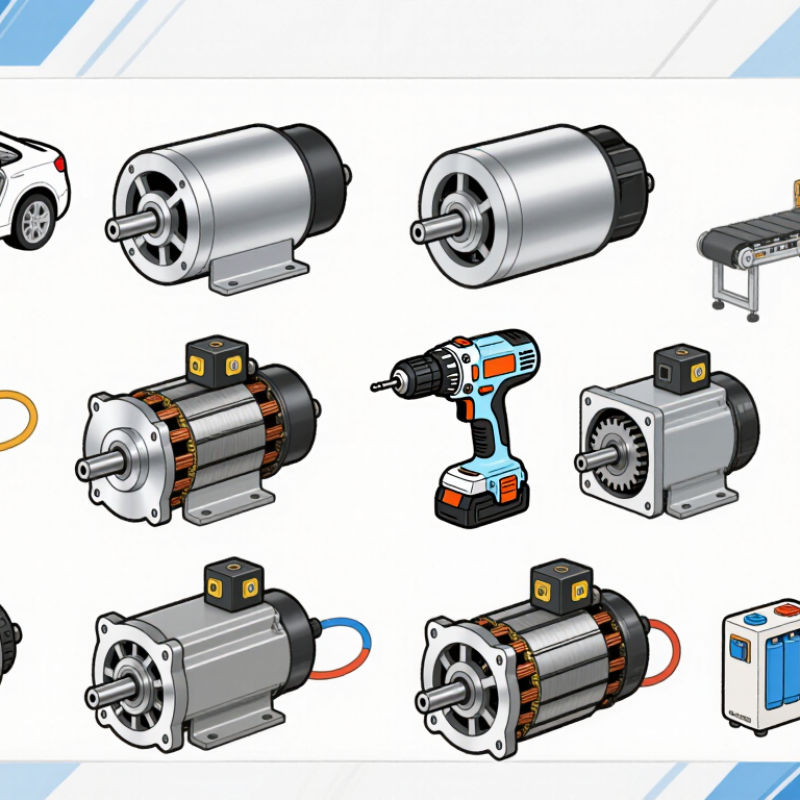
Top 10 Battery Operated DC Motors for Global Buyers

How Battery-Operated DC Motors Work

A battery-operated DC motor converts stored electrical energy into rotation. Battery voltage pushes current through copper windings, creating a magnetic field. That field interacts with the motor’s magnets and produces torque on the rotor. In brushed motors, a commutator switches current direction as the rotor turns, keeping the shaft moving. A simple loop. Brushless motors use electronic switching instead, managed by a controller.

Speed and torque depend on voltage, current, winding design, and load. The International Energy Agency’s 2011 analysis estimated that motor-driven systems use about 46% of global electricity. This broad figure covers many applications, not battery-powered motors alone.

At a workbench, a small motor may spin freely, then slow when driving a wheel or gearbox. Heat still matters. Higher loads can draw more current, so wire size, controller rating, and ventilation deserve attention.

Real setups are messier: battery chemistry, temperature, friction, and startup torque all affect runtime. A no-load test can mislead.

Main Types of Battery-Powered DC Motors

Battery-powered DC motors come in several forms, each suited to different movement needs. Brushed DC motors use brushes and a commutator to turn battery current into rotation. They are simple to control, but the brushes wear over time and may create electrical noise. For a small fan or toy wheel, their straightforward design can be useful.

Brushless DC motors use electronic controllers instead of brushes. They often run efficiently and last longer, though the controller adds cost and wiring complexity. Geared DC motors pair a motor with a gearbox, trading speed for stronger turning force. This helps a compact robot climb a ramp or move a loaded mechanism. Coreless motors have lightweight rotors and respond quickly, making them useful in small, fast-moving devices. Stepper motors move in measured increments, but can draw current while holding position. Small motors run hot.

Choosing a type means checking more than the battery’s printed voltage. A motor’s starting or stalled current can be much higher than its typical running current, so the battery and driver need adequate capacity. Match the motor to the load, desired speed, and available space. A common oversight is focusing on speed alone; added gearing may improve control but also brings friction and backlash. There is no universal best option, and real performance can differ from a tidy specification sheet.

Top 10 Battery Operated DC Motors for Global Buyers - Main Types of Battery-Powered DC Motors

No. Motor Type Commutation / Configuration Common Battery Bus Voltage Typical Speed Profile Torque and Output Characteristics Key Advantages Typical Applications
1 Permanent-Magnet Brushed DC Motor Brushes and a commutator; permanent-magnet stator 3–24 V DC in many small battery-powered designs Moderate to high motor speed; speed generally falls as load increases Direct shaft output; torque rises with motor current Simple drive electronics; speed and direction are easy to control Portable tools, small pumps, toys, and compact mechanisms
2 Coreless Brushed DC Motor Brushes and commutator; lightweight, ironless rotor winding Approximately 1.5–12 V DC in many miniature designs Usually high speed with rapid acceleration and deceleration Best suited to low-inertia loads; typically lower continuous torque than larger motors Low rotor inertia and responsive speed changes Small pumps, medical instruments, model devices, and precision mechanisms
3 Iron-Core Brushed DC Motor Brushes and commutator; wound rotor with an iron core Commonly 6–48 V DC, depending on motor size and design Available in a broad range of speeds; often used where sustained output is needed Can provide useful continuous torque; performance depends on winding and cooling Established technology with straightforward drive requirements Battery-powered equipment, vehicle auxiliaries, and industrial mechanisms
4 Brushed DC Spur Gearmotor Brushed DC motor with spur-gear reduction Commonly 3–24 V DC for compact gearmotors Reduced output speed; selected through the gear ratio Higher output torque than the same motor alone, with gear-train efficiency and load limits Simple, compact way to trade speed for torque Small robots, conveyors, vending mechanisms, and positioning drives
5 Brushed DC Planetary Gearmotor Brushed DC motor with planetary gear reduction Commonly 6–48 V DC, depending on the motor and gearbox Output speed is set by the selected reduction ratio High torque density for its size; allowable torque depends on gearbox rating Compact coaxial layout and load sharing across multiple planet gears Robotics, powered actuators, mobility equipment, and compact automation
6 Brushed DC Worm Gearmotor Brushed DC motor with worm-and-wheel reduction Commonly 6–48 V DC in battery-powered products Low output speed with substantial reduction in a compact arrangement Can deliver high reduction; resistance to back-driving depends on the design and load Right-angle output and compact high-reduction gearing Small lifts, gates, adjustable platforms, and powered mechanisms
7 Brushed DC Servo Motor Assembly Brushed DC motor combined with position or speed feedback and a controller Commonly 6–48 V DC, subject to the servo drive rating Controlled to a commanded speed or position; range depends on the system Feedback enables regulated motion; continuous and peak torque must be checked separately Closed-loop control improves repeatability and load correction Battery-powered positioning systems, mobile robots, and instrument mechanisms
8 Brushless DC Inrunner Electronic commutation; rotor turns inside the stator Commonly 12–48 V DC in small and medium battery systems Often suited to relatively high motor speeds; controller and winding determine the operating range Motor torque is delivered directly or through an optional gearbox No brushes to wear; compact rotor supports high-speed designs Portable equipment, pumps, fans, and electric drive systems
9 Brushless DC Outrunner Electronic commutation; outer rotor turns around the stator Commonly 7.4–48 V DC, depending on the motor and battery pack Often operated at lower motor speeds than comparable inrunners Large rotor radius can provide useful torque without a gearbox Good torque capability in a direct-drive arrangement Small electric vehicles, fans, model aircraft, and direct-drive mechanisms
10 Brushless DC Gearmotor Electronically commutated motor with spur or planetary reduction Commonly 12–48 V DC, subject to motor-controller compatibility Gearbox reduces motor speed to a selected output speed Gear reduction increases output torque within the motor and gearbox ratings Combines brushless operation with reduced-speed, higher-torque output Robotics, automated equipment, mobile platforms, and battery-powered actuators

Note: Voltage ranges are common examples, not universal ratings. Actual voltage, speed, torque, duty cycle, and controller requirements vary by motor design. Confirm the motor and gearbox datasheets against the battery pack and intended load.

Top 10 Battery-Operated DC Motors for Global Buyers

Top 10 Battery-Operated DC Motors for Global Buyers

Choosing a battery-operated DC motor starts with the job, not the catalog ranking. A small motor may suit a handheld tool, while a geared model can move a compact cart at lower speed. Compare rated voltage, no-load speed, torque, and stall current against the battery and workload. A motor that looks powerful on paper can drain a pack quickly under repeated starts. Check the duty cycle, too. Continuous operation and short bursts are not the same thing.

Tips: Test the motor with the intended battery, load, and wiring. Measure current during startup, not just while running steadily. Leave some capacity for temperature changes and battery aging. A tidy specification sheet can still miss real operating conditions.

For global buyers, ask for consistent test data and clear drawings before comparing suppliers. Confirm shaft dimensions, mounting points, connector details, and gear ratio. These small details can prevent frustrating fit problems later. Also consider operating temperature, vibration, and dust exposure. If the motor will run outdoors, verify the enclosure and cable protection rather than assuming they are adequate. One honest limitation: a short bench test cannot predict every field condition. Pilot testing remains worthwhile, even when the numbers seem convincing.

Key Specifications and Applications to Compare

When comparing battery-operated DC motors, start with rated voltage, no-load speed, stall torque, and continuous torque. Stall figures describe a brief condition, not safe everyday performance. A small gearmotor may turn a loaded wheel steadily, while a faster direct-drive motor may suit a fan or pump. Check current draw under the actual load; a motor that fits the voltage can still drain a compact battery quickly.

Thermal limits, shaft dimensions, gear ratio, and duty cycle also matter. The U.S. Department of Energy’s Improving Motor and Drive System Performance: A Sourcebook for Industry reports that motor-driven systems use about 68% of U.S. manufacturing electricity. That figure covers industrial systems broadly, not battery DC motors alone, but it underscores why efficiency and load matching deserve attention. Compare application fit: robotics needs controllable speed and torque; portable tools need short bursts and thermal headroom; small conveyors need reliable continuous operation. A neat specification sheet can still miss real-world friction.

Tips: Test the motor with the intended battery, controller, and load. Measure running current and temperature after repeated starts. Leave margin for voltage drop as the battery discharges; this detail is easy to overlook.

Global Sourcing, Battery Compatibility, and Safety Standards

Top 10 Battery Operated DC Motors for Global Buyers
Global Sourcing, Battery Compatibility, and Safety Standards

Choosing a battery-operated DC motor for overseas sourcing starts with its real operating load, not its catalog speed. A small geared motor may draw 0.4 A while turning freely, then demand several times more at startup or during a jam. Match the motor’s rated voltage to the battery pack’s nominal voltage, and check the pack’s fully charged voltage against the motor’s permitted range. A “12 V” label alone tells too little. Ask for a current-versus-torque curve, duty-cycle limits, connector details, and operating-temperature range. These details help prevent weak performance and unexpected heat.

For global orders, confirm that the motor and battery suit the destination market and intended equipment. Requirements can vary by region and product category. Request current test reports and declarations, then have an importer or qualified test laboratory confirm which electrical, electromagnetic compatibility, and battery requirements apply. Check polarity, wire gauge, and stall-current protection in the assembled product, not just on separate datasheets. A sample run under realistic load can reveal problems that paperwork misses. I have seen procurement plans overlook this step; it is easy to regret later.

Tips: Compare startup current with the battery’s discharge rating. Verify connector polarity before ordering. Keep supplier documents with each batch. Small details matter.

Top 10 Battery Operated DC Motors for Global Buyers

Battery compatibility reference: nominal voltage of 10 common battery configurations used to power DC motors. This is not a motor ranking.

How to use: Match the battery pack’s voltage to the motor’s rated voltage, and check current capacity, startup current, and polarity. Lithium-ion pack voltages shown are nominal; fully charged voltage is higher. Confirm battery and motor specifications before sourcing.

For safety and shipping, consult applicable local requirements and relevant standards, including IEC 62133-2 for portable lithium secondary cells and UN 38.3 for lithium battery transport.

FAQS

What are the main types of battery-powered DC motors?

Brushed motors are simple to control, but their brushes wear over time. Brushless motors often last longer, though their controllers add wiring and cost. Geared motors trade speed for stronger turning force. Coreless motors respond quickly, while stepper motors move in measured increments.

How should I choose a motor for my project?

Start with the job, load, desired speed, and available space. A geared motor may help a small robot climb a ramp. A faster direct-drive motor may suit a fan. Speed alone can be misleading.

Why should I check stall current?

Starting or stalled current can greatly exceed normal running current. The battery and motor driver need enough capacity for those brief demands. Measure startup current with the intended battery and load.

Does matching the motor’s rated voltage to the battery guarantee compatibility?

No. Current draw, voltage drop, and workload matter too. A motor can match the printed voltage yet drain a small battery quickly. Leave some capacity for battery aging.

What specifications should I compare?

Check rated voltage, no-load speed, continuous torque, stall torque, and current draw. Also confirm shaft dimensions, mounting points, gear ratio, and duty cycle. Small fit details can cause real trouble.

When is a geared motor useful?

A gearbox can provide more turning force at lower speed. It may help a compact cart move a load steadily. Gearing also adds friction and backlash, so control may not feel perfect.

How can I tell whether a motor will overheat?

Check its duty cycle and thermal limits. Test repeated starts, then measure temperature during operation. Continuous running differs from short bursts. Small motors run hot.

What should I test before using a motor outdoors?

Check enclosure protection, cable protection, vibration, and dust exposure. Test with the intended battery, controller, and load. A short bench test cannot predict every field condition. Pilot testing is still worthwhile.

Conclusion

This guide explains how a Battery Operated DC Motor converts power from a battery into rotary motion, and how its performance depends on motor design, voltage, current, and load. It introduces common types of battery-powered DC motors and outlines ten options for global buyers to consider, from compact motors for small devices to higher-torque models for more demanding equipment. Rather than focusing on brand names, the overview helps readers understand the differences that matter when narrowing down suitable choices.

Key comparison points include rated voltage, speed, torque, power consumption, size, operating life, and intended application. The guide also covers practical sourcing considerations, such as matching a motor to the battery’s chemistry and voltage, checking connector and mounting requirements, and confirming that product documentation and safety certifications meet the needs of the destination market. These factors can help buyers make informed, reliable purchasing decisions.

Henry

Henry

Henry is a dedicated marketing professional with a profound expertise in the company's offerings. With years of experience in the industry, he possesses an impressive understanding of the market dynamics and consumer behaviors that drive success. Henry is committed to sharing his insights through......